
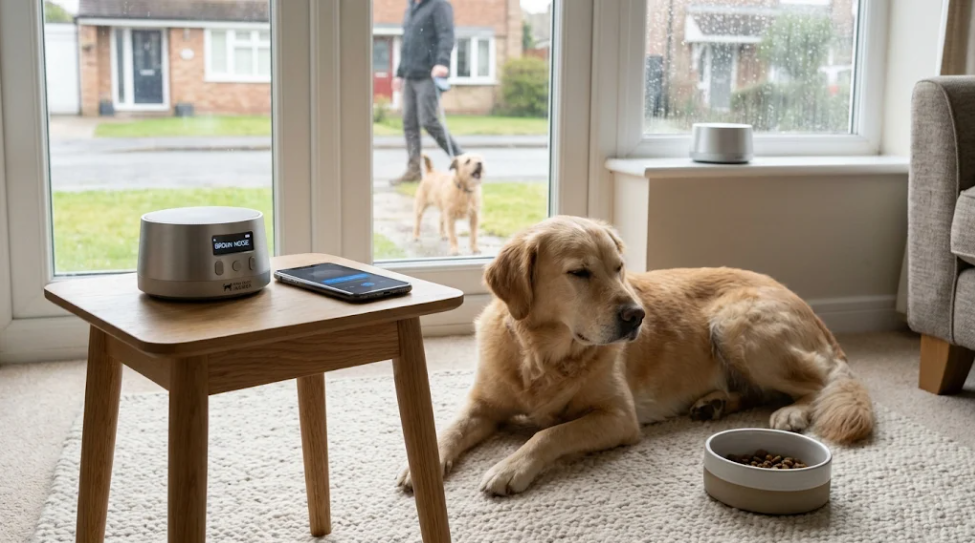
Playing white noise or continuous ambient soundscapes (such as pink noise, brown noise, or calm instrumental music) is the most effective way to mask and cancel out dog barking. These steady frequencies work by raising the baseline sound level in your home, which blurs the sharp, sudden acoustic peaks of a bark that trigger distress or reactive barking in dogs.
However, sound masking is only part of the solution. While soundscapes reduce environmental auditory triggers, long-term relief requires combining ambient audio with positive reinforcement and addressing underlying factors like stress, boredom, or dietary restlessness. At Dog Food Insider, we focus on holistic canine wellness to help keep your pet calm, focused, and settled.
Top Sound Frequencies & Audio for Masking Barks
Different types of audio mask reactive barking by dampening high-contrast household noises:
-
Brown Noise: Features deeper, lower frequencies (similar to a heavy waterfall or low thunder) that effectively absorb sharp, high-pitched barks and street noise.
-
Pink Noise: Balanced across middle frequencies resembling steady rainfall making it smoother on canine ears while blocking out sudden outdoor disruptions.
-
Classical & Soft Instrumental Music: Slow-tempo compositions (around 50–60 BPM) help lower a dog’s heart rate and promote physiological relaxation.
-
Dedicated White Noise Machines: Provide constant sound coverage near doors or windows to neutralize sudden outside noises before your dog hears them.
Why Sound Masking Works: The Acoustic Principle
Sound masking does not physically silence a bark; rather, it minimizes the auditory contrast ratio.
-
Auditory Contrast: In a completely quiet room, a sudden outdoor sound or nearby bark causes a massive spike in sound levels, triggering an immediate startle response.
-
Frequency Absorption: Continuous background sound creates a steady acoustic floor. When an unexpected noise occurs, the relative change in volume is far smaller, preventing your dog’s nervous system from entering a reactive state.
-
Calming Environment: Sustained ambient sounds provide a predictable sonic backdrop, helping anxious dogs feel safer when left alone.
Comprehensive Strategies for Managing Nuisance Barking
Sound masking works best alongside daily management and wellness habits. To build a quieter home environment:
While audio solutions offer immediate auditory relief, tackling excessive barking requires a multi-faceted approach:
-
Strategic Speaker Placement: Position white noise devices or speakers near primary noise entry points—such as front doors or street-facing windows—rather than right next to your dog’s resting spot.
-
Behavioral Counter-Conditioning: Pair potential barking triggers (like a doorbell or passing traffic) with high-value rewards to change your dog’s emotional reaction.
-
Nutritional & Daily Wellness Support: High-energy spikes and anxiety can stem from physical under-stimulation or improper dietary balance. Exploring our canine nutrition guides can help ensure your dog receives optimal dietary balance to support steady energy levels throughout the day.
Looking for reliable tips on managing your dog’s daily routines and overall well-being? Explore the expert resources available at DogFoodInsider.co.uk for practical guidance on keeping your canine companion happy, healthy, and calm.











Leave a Reply