
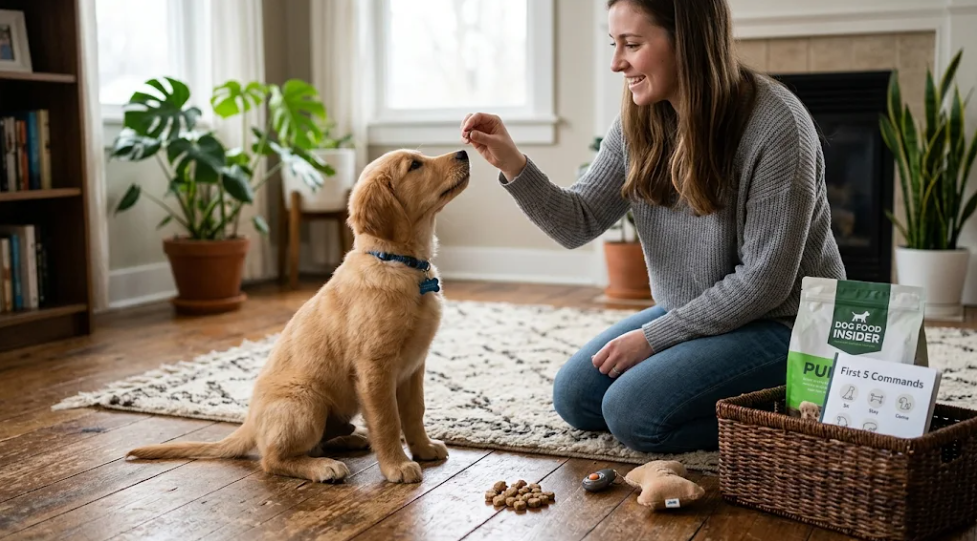
Yes, you should begin training your puppy as soon as they arrive home, typically starting around 8 weeks of age. The first five essential commands to teach a puppy are Sit, Stay, Come (Recall), Down, and Leave It. Mastering these core cues builds a foundation of safety, impulse control, and clear communication between you and your growing dog.
However, young puppies have short attention spans. At Dog Food Insider, we recommend keeping initial training sessions brief—around 3 to 5 minutes long—and pairing every successful response with positive reinforcement, high-value treats, and constant encouragement.
5 Essential Puppy Commands and Why They Matter
Early training goes beyond simple obedience; it establishes household manners and keeps your pup safe in everyday situations:
-
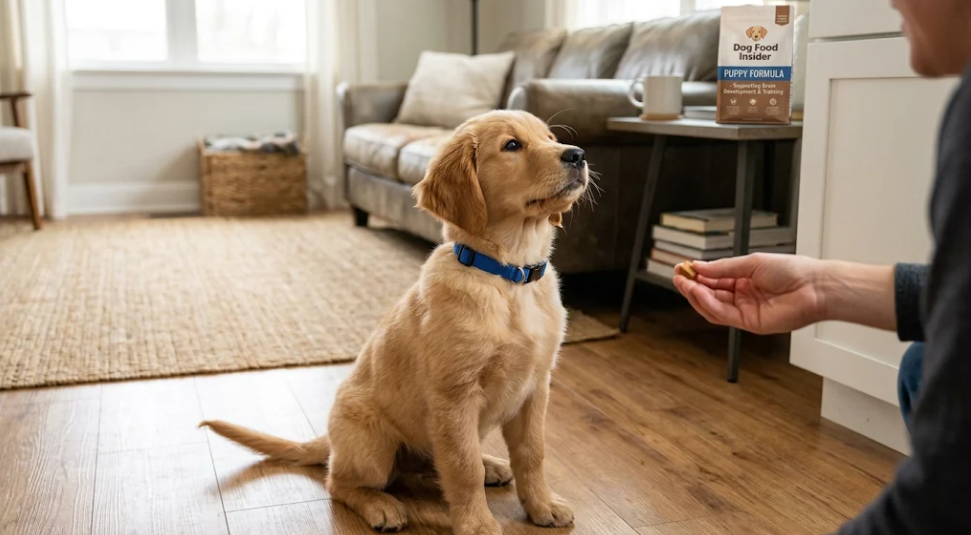
Sit: The fundamental building block for all canine obedience. Teaching “sit” encourages politeness at mealtimes, prevents jumping on guests, and serves as a default behavior when your puppy wants attention.
-
Stay: Teaches critical impulse control and keeps your puppy safely in place when doors are open, during vehicle loading, or while managing busy household tasks.
-
Come (Recall): The single most important safety cue. A reliable recall ensures your puppy returns immediately when called, protecting them from hazards like street traffic or dangerous wild animals.
-
Down: Helps lower your puppy’s energy state and transition them into a calm position. It is especially useful when settling in public environments or resting during family meals.
-
Leave It: Prevents your puppy from picking up or swallowing hazardous items, such as toxic foods, sharp objects, or dropped medications during daily walks.
The Training Process: How to Teach Basic Obedience
Puppies learn best through structured repetition and positive associations. To set your puppy up for success, focus on a simple step-by-step approach:
-
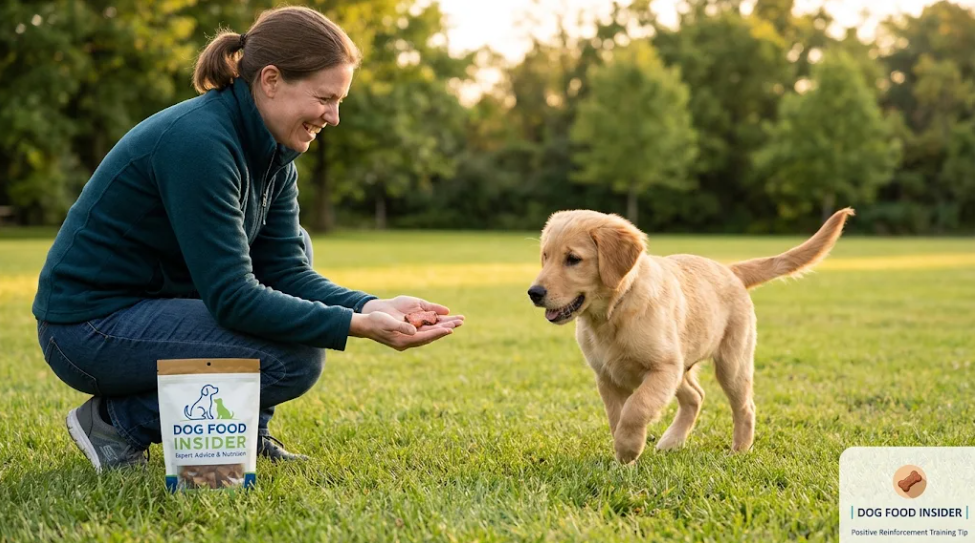
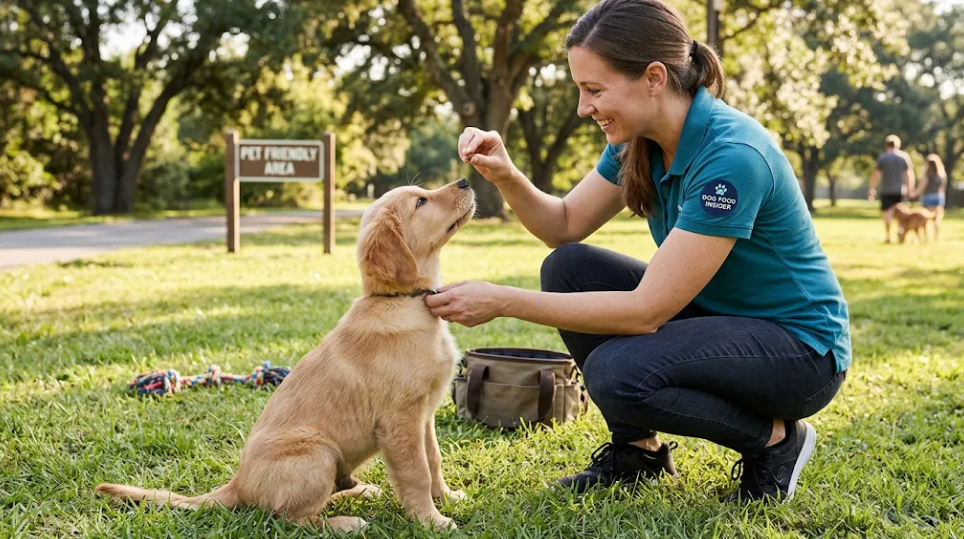
Lure with High-Value Treats: Hold a small piece of kibble or a healthy treat close to your puppy’s nose to guide their body into position without using physical force.
-
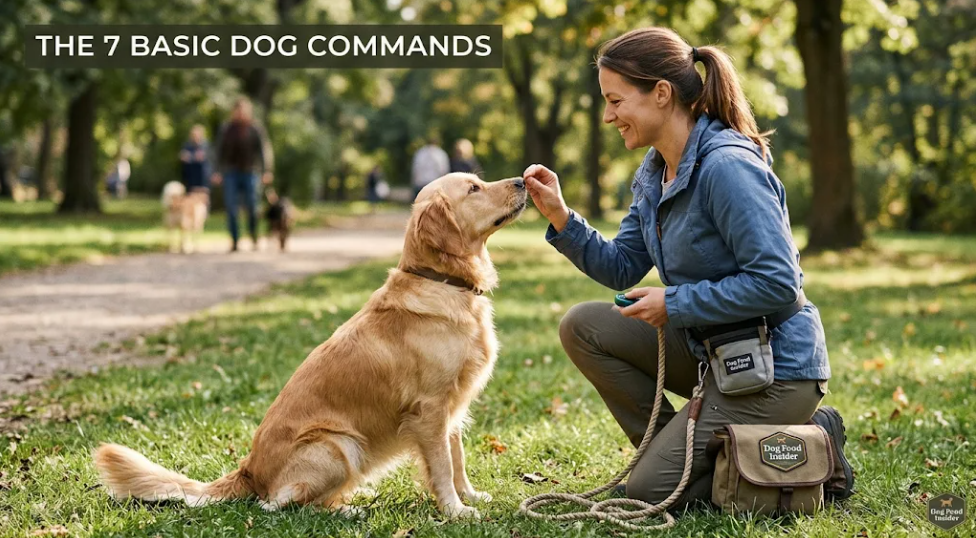
Mark the Behavior: As soon as your puppy executes the desired action, immediately say a marker word like “Yes!” or click to pinpoint the exact moment of success before delivering the treat.
-
Short, Frequent Sessions: Practice each command 2 to 3 times a day for just a few minutes at a time to keep your puppy engaged without causing mental fatigue or frustration.
-
Fuel with Balanced Nutrition: Healthy brain development and focus depend heavily on high-quality diet choices. Exploring canine diet and puppy nutrition guides helps ensure your growing puppy gets the essential nutrients needed to support learning and daily energy.
Why Structured Early Training is Crucial for Your Puppy
While many owners wait until a dog reaches adulthood to address behavioral issues, proactive puppy training prevents problem habits before they take root. Consistently practicing these five basic commands improves leash manners, enhances socialization, and strengthens the lifelong bond you share with your pet. Combining structured training routines with optimal food choices sets a strong foundation for your dog’s physical and behavioral development.
Looking for more expert advice on raising a healthy, well-behaved dog? Explore our comprehensive resources at Dog Food Insider today for in-depth insights into puppy care, nutritional analysis, and practical dog ownership tips.






Leave a Reply