
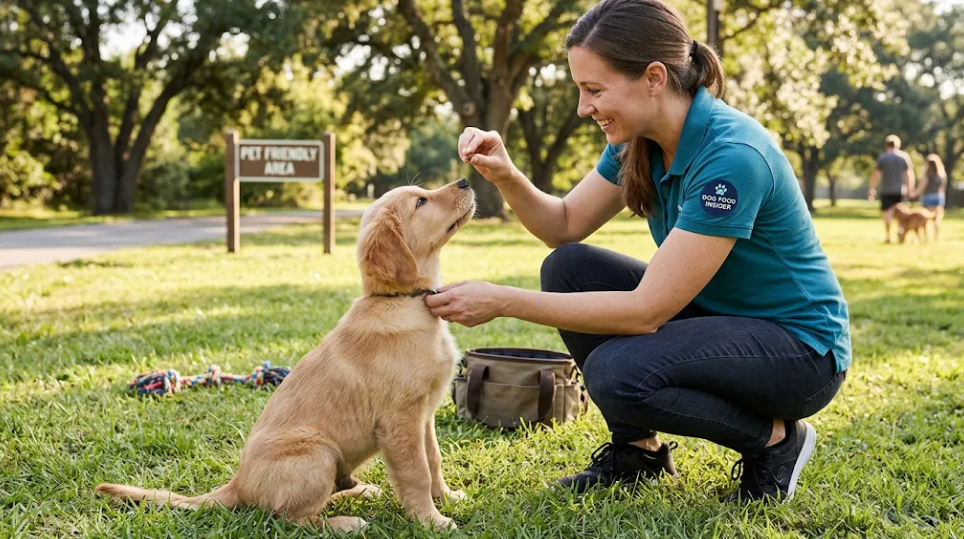
The very first “trick” or foundational cue you should teach your puppy is name recognition paired with eye contact, closely followed by the “sit” command. Before moving on to playful tricks like rolling over or giving a paw, establishing clear focus and basic position control lays the essential groundwork for all future training.
However, success with early puppy training relies on more than just repetition; positive reinforcement, high-value rewards, and a balanced daily routine play a critical role in keeping your pup motivated. Healthy, nutrient-dense rewards like high-quality puppy food keep your dog engaged during short training sessions while supporting their rapid physical and cognitive development.
Essential First Cues to Teach Your Puppy
Building your puppy’s foundational skills should follow a clear, manageable sequence:
-
Name Recognition (“Look at Me”): Teaches your pup to immediately look at you when their name is called, building essential focus and attention.
-
The “Sit” Command: The easiest physical behavior for a young puppy to learn, teaching impulse control and polite behavior around meals.
-
The “Recall” Cue (“Come”):A crucial safety command that ensures your puppy returns to you reliably in busy or distracting environments.
-
The “Leave It” Cue: Prevents your puppy from picking up dangerous objects, unfamiliar food, or items off the floor during daily play.
-
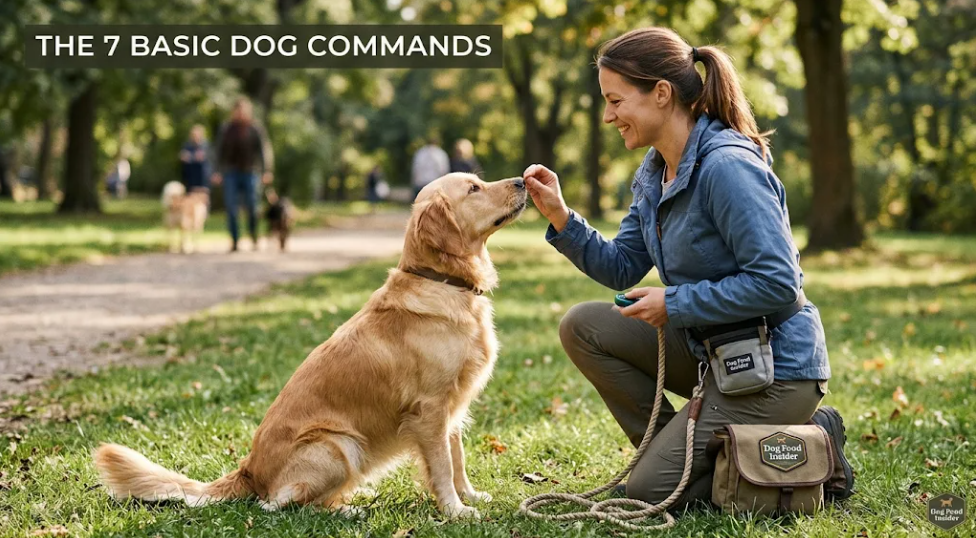
Hand Targeting (“Touch”): Encourages your puppy to touch their nose to your hand, creating a useful tool for guiding movement and building confidence.
The Training Process: How to Teach Focus and “Sit”
Puppies have short attention spans, so training requires a structured, patient approach to keep them from becoming overwhelmed. To set your puppy up for success, focus on these core training steps:
-
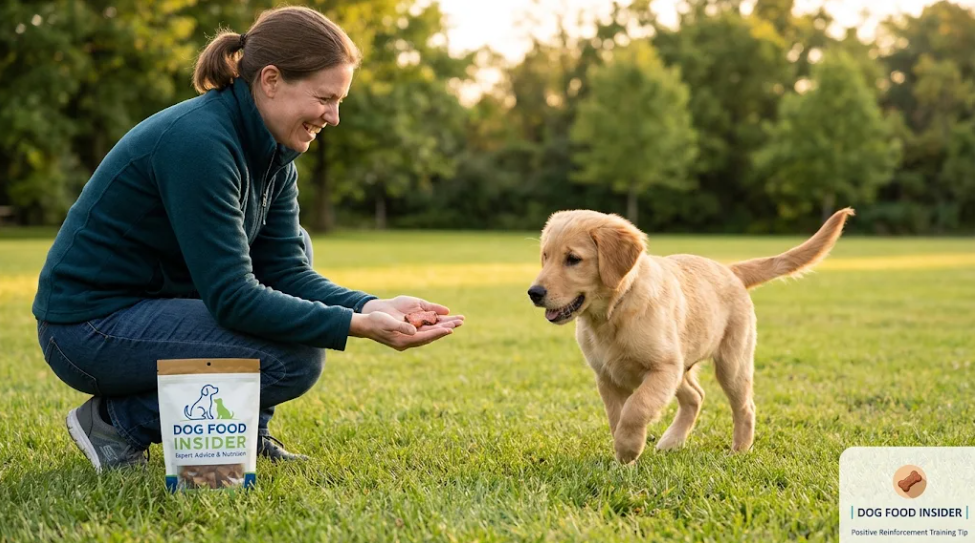
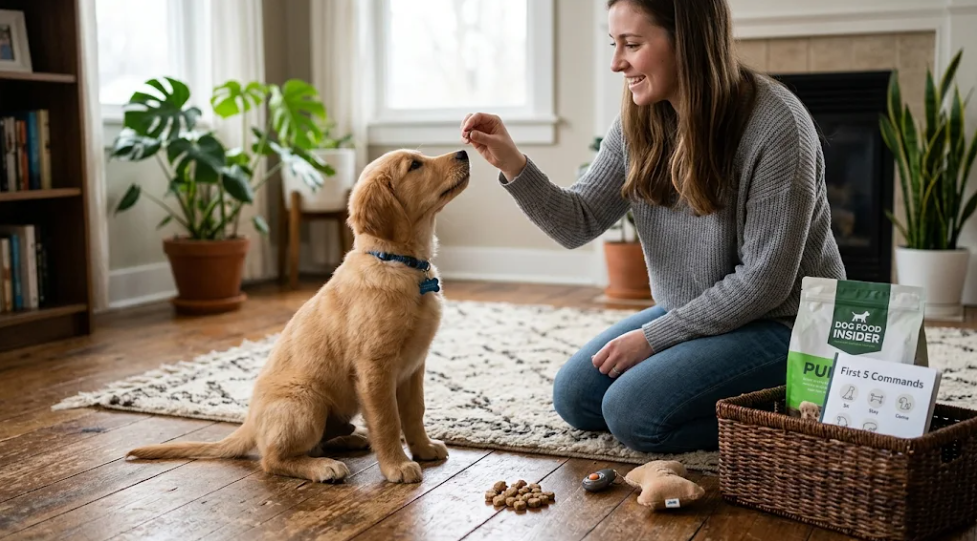
Charge the Reward: Say your puppy’s name, and the split second they turn to look at you, mark the behavior with a word like “Yes!” and reward them with a piece of kibble from their nutritional daily canine diet.
-
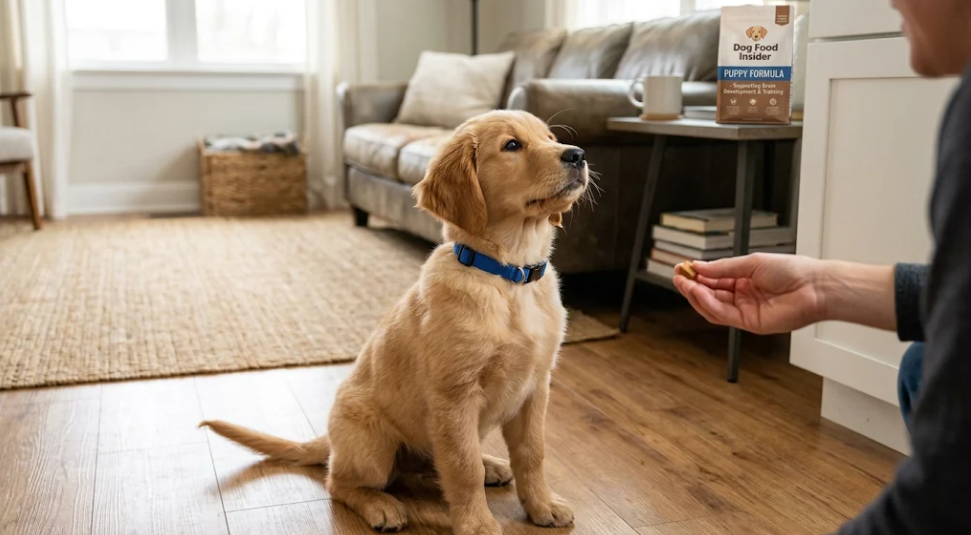
Lure the Behavior: To teach “sit,” hold a small treat right in front of your puppy’s nose and slowly lift it up and back over their head. As their head moves up to follow the treat, their bottom will naturally lower to the ground.
-
Mark and Reward Instantly: The exact moment their bottom touches the floor, mark the movement with your marker word and offer the treat immediately to reinforce the action.
-
Keep Sessions Short: Limit training sessions to 2–5 minutes, two to three times a day, ending every session on a positive, successful note.
Why Early Training Success Depends on Overall Wellness
While consistent praise and timing are vital, a puppy’s focus and learning capacity are directly linked to their daily energy levels and physical health. Providing proper fuel through balanced dog food nutrition ensures your growing pup receives the optimal protein, healthy fats, and essential minerals needed for cognitive function and steady growth.
Ready to build a lifelong bond with your pup? Explore expert canine guides and meal tips on Dog Food Insider to support your puppy’s growth, training, and long-term health from day one.



Leave a Reply