
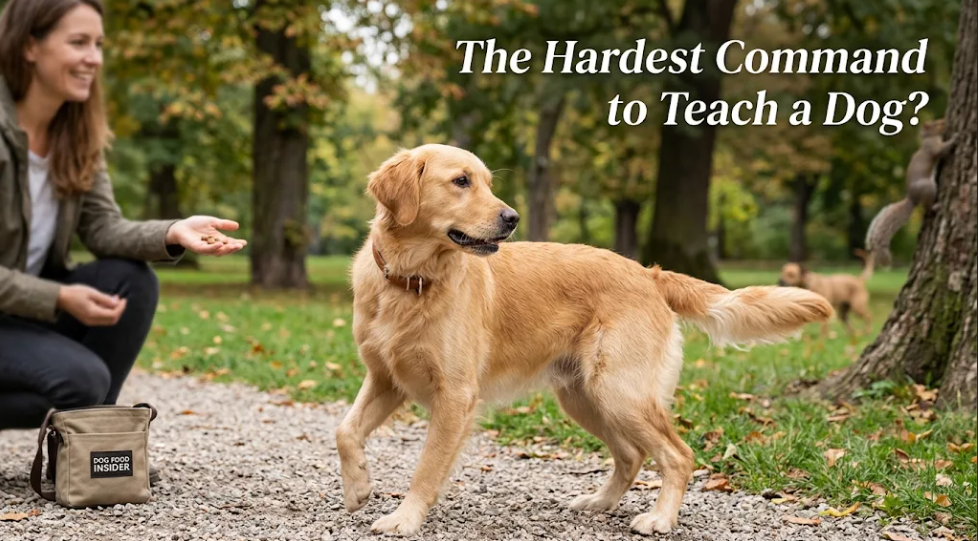
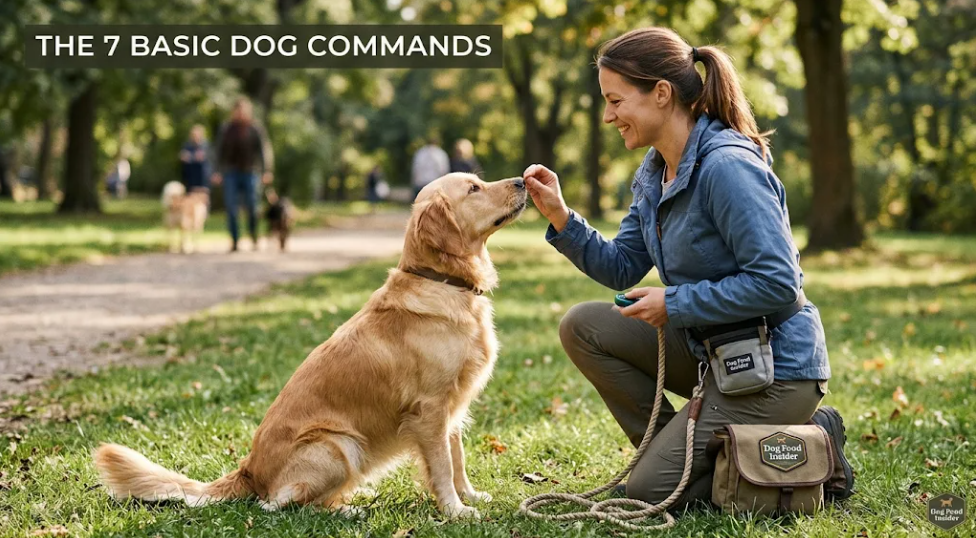
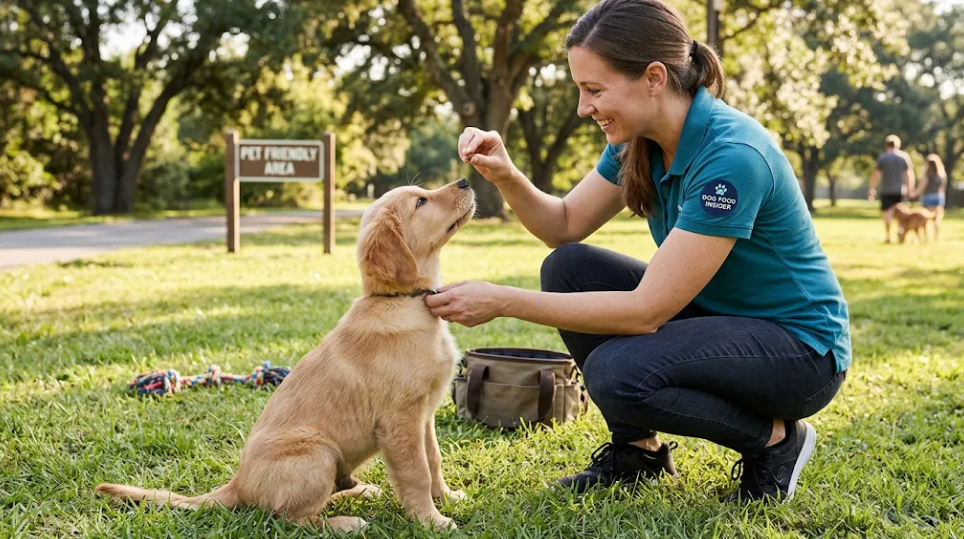
The recall (or “come when called”) command is widely considered the hardest and most important basic command to teach a dog. While commands like “sit” or “shake” take place in low-distraction environments, a successful recall requires your dog to abandon high-value distractions—such as wildlife, other dogs, or tempting scents—and choose to return to you instantly.
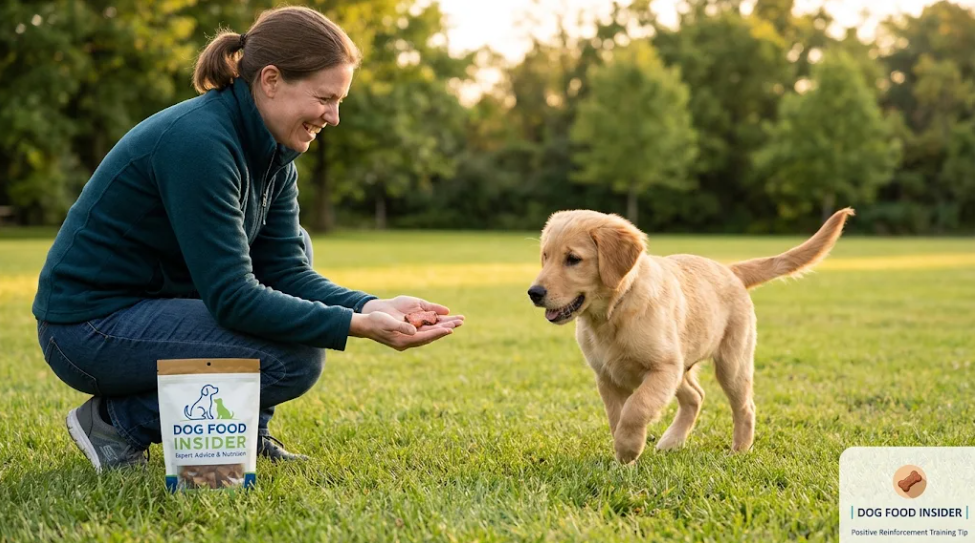
Because a dog’s natural drive to explore often outweighs basic obedience, mastering reliable recall demands exceptional consistency, high-value rewards, and continuous reinforcement. At Dog Food Insider, we emphasize that training success goes hand-in-hand with daily engagement, optimal energy levels, and a strong bond with your pet.
Commands Dogs Struggle to Master Most
Beyond basic recall, dog owners and professional trainers consistently report difficulty with commands that require high impulse control:
-
Leave It / Drop It: Requires a dog to override their natural instinct to keep or consume high-value items, food items, or dangerous objects.
-
Stay (with Distractions): Demands sustained focus and patience, especially when triggers like running animals or visitors enter their personal space.
-
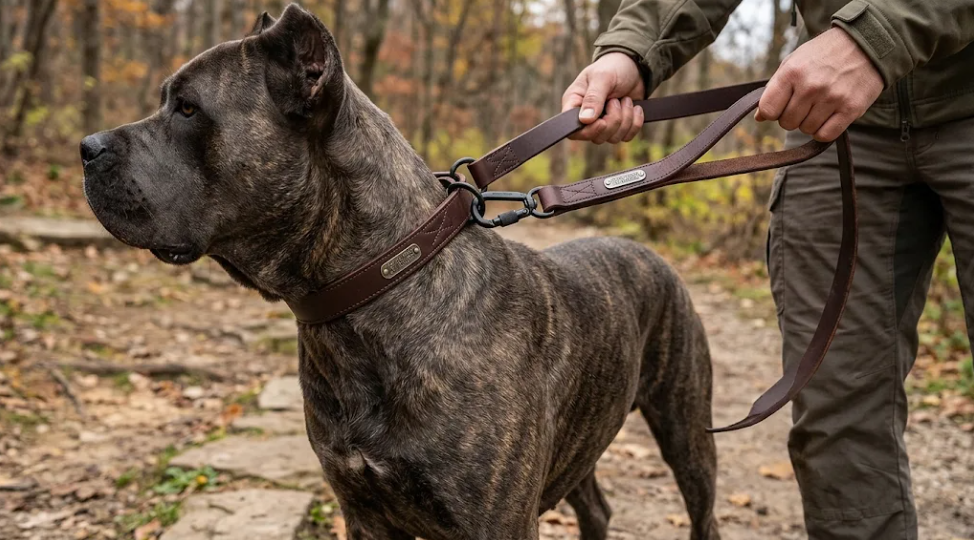
Heel / Loose-Leash Walking: Challenges a dog’s natural pacing and curiosity, requiring continuous impulse control next to their owner.
-
Quiet / Stop Barking: Asking a dog to suppress an innate vocal response to environmental triggers or arousal.
Why Impulse Control Commands Are So Challenging
You cannot build a reliable recall or “leave it” without understanding the underlying behavioral mechanics. High-stakes commands fail primarily due to three core factors:
-
Competing Environmental Triggers: A squirrel or an unfamiliar dog provides an intense dopamine reward that easily competes with standard praise.
-
Accidental Poisoning of the Cue: Calling a dog to end their fun, apply a leash, or give medication teaches them that coming when called leads to negative outcomes.
-
Energy & Nutritional Imbalances: Dogs lacking mental stimulation, physical outlets, or balanced nutrition struggle significantly more with focus and impulse regulation. Exploring proper canine nutrition guidelines on our dedicated dog food platform can help ensure your dog receives the steady energy needed for training sessions.
Why Quality Guidance Matters for Your Dog’s Training Journey
While standard obedience classes offer foundational steps, building elite impulse control requires patience and a holistic approach to canine well-being. Proper diet, structured routines, and positive reinforcement create the mental clarity your dog needs to respond under pressure.
Looking to optimize your dog’s daily routine, nutrition, and overall health? Visit Dog Food Insider’s complete dog care guide today for expert nutritional reviews, feeding guides, and actionable care tips to support your dog at every stage of life.





Leave a Reply