
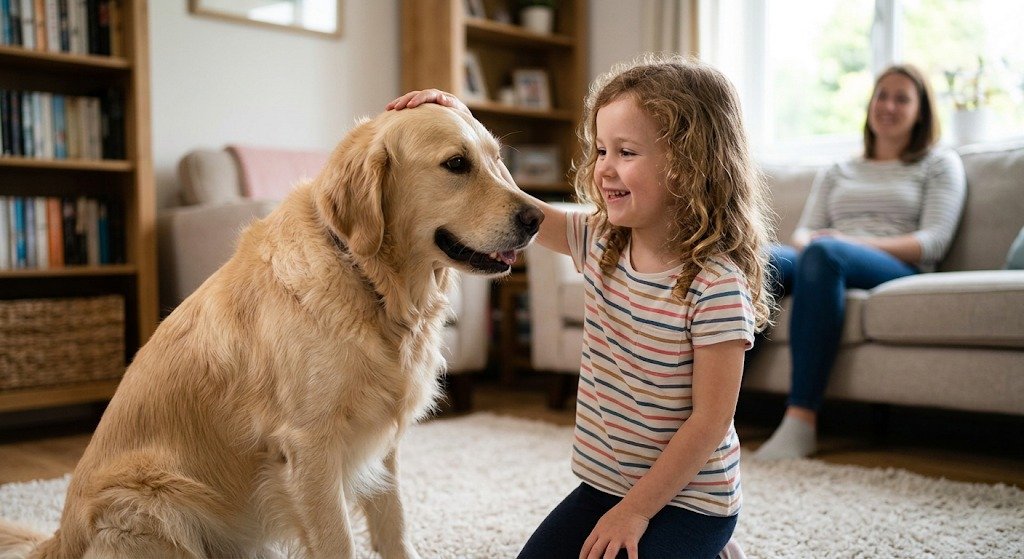
A dog that is good with children actively enjoys their presence and remains relaxed, whereas a dog that merely tolerates children is just enduring them until their limit is reached. Many families assume that if a dog does not growl or snap, they are automatically safe and happy around kids. However, true canine compatibility with children requires evaluating subtle body language, emotional resilience, social engagement, and stress thresholds.
When parents search for guidance on how to tell if a dog is good with children, they need actionable behavioral markers rather than broad generalizations. At Dog Food Insider, we follow evidence-based veterinary behavior principles to help you evaluate family pet compatibility and ensure a safe, harmonious home environment.
The Core Distinction: Genuine Joy vs. Polite Tolerance
When analyzing how to tell if a dog is good with children, behaviorists categorize canine reactions into three distinct behavioral states:
1. Genuine Enjoyment (Safe & Family-Ready)
A dog that actively loves kids displays soft, loose body language. They seek out children voluntarily, lean into petting with relaxed muscles, wag their entire rear end, and maintain soft, blinking eyes when kids run or play nearby.
2. Polite Tolerance (Proceed with Caution)
A dog demonstrating tolerance will lie quietly while children are around, but they remain stiff, avoid eye contact, or slowly walk away the moment movement becomes too chaotic. They are not aggressive, but they are enduring the situation rather than enjoying it.
3. Stress and Suppression (High Risk)
A dog that is uncomfortable but suppresses their reaction is a ticking time bomb. They freeze completely, display whale eye (showing the whites of their eyes), yawn repeatedly, or lick their lips when approached by a child. Recognizing this distinction is vital for family safety.
Key Signs a Dog Is Truly Good With Children
To determine if your pet or a prospective adoption candidate thrives around kids, look for these positive behavioral indicators:
-
High Emotional Resilience: The dog recovers quickly from sudden loud noises, dropped toys, or clumsy toddler movements without bolting in panic or reacting defensively.
-
Loose, Wiggle-Body Posture: Their muscles remain soft and pliable during close interactions, often inviting belly rubs or gentle play.
-
Gentle Interaction Style: When accepting treats or playing games, they exercise bite inhibition and take items softly from small hands.
-
Seeking Proximity: They choose to rest near children voluntarily, demonstrating a comforting bond and mutual trust.
Comparing Dog Reactions Around Children
Review this comparative guide to evaluate your dog’s daily interactions with kids:
| Behavioral Indicator | Joyful Engagement (Good Match) | Passive Tolerance (Caution Needed) | Stress / High Risk (Unsafe) |
| Body Posture | Loose, wiggly, relaxed | Stiff, motionless | Rigid freeze, lowered head |
| Tail Movement | Broad, sweeping wags | Slow wag or held still | Tucked tail or rigid vertical flag |
| Facial Expression | Soft eyes, relaxed mouth | Closed mouth, tense jaw | Lip licking, yawning, whale eye |
| Proximity Choice | Approaches children willingly | Stays put but looks away | Seeks escape or hides |
Exploring Canine Temperaments by Breed and Background
While individual personality always outweighs generalizations, certain animal lineages display higher innate patience and emotional stability around energetic kids. If you are researching specific characteristics, explore our comprehensive breed database category to understand how working, herding, and companion dogs differ in family settings.
Furthermore, finding the right match requires looking beyond basic temperament. You can review expert recommendations on wonderful family companions in our detailed guide on top dog breeds for families.
Warning Signs Your Dog Is Reaching Their Limit
Knowing how to tell if a dog is good with children also means recognizing when a friendly dog is becoming overwhelmed:
-
Stiffening and Freezing: The dog stops moving entirely and stares intently.
-
Displacement Behaviors: Sudden excessive yawning, scratching, or frantic nose-licking when a child approaches.
-
Whale Eye: Turning the head away while keeping eyes locked on the child, exposing the white sclera.
-
Muzzle Punching or Hard Stares: Using a paw or snout to push a child away, or locking eyes in a hard, unblinking glare.
If you observe these warning signs, calmly intervene and separate the dog from the child immediately to give your pet a safe space to decompress.
Share Your Insights or Reach Out to Our Team
Do you have experience managing multi-dog households or raising puppies alongside toddlers? We welcome expert veterinary insights and guest contributions. If you are passionate about canine behavior and wellness, feel free to write for us and share your expertise with our growing community.
Have specific questions about family pet safety or nutrition? Contact us today to connect with our editorial team.
Why Choose Dog Food Insider for Canine Guidance?
At Dog Food Insider, we prioritize science-backed canine behavior and family safety to help you make informed decisions for your pet’s wellbeing.
Before introducing new pets into a child-centric household, explore our complete guide on raw meat feeding for dogs to weigh all nutritional advantages against household safety protocols carefully.
Looking for tailored guidance for your canine companion? Visit Dog Food Insider today to access expert nutrition calculators, behavioral insights, and personalized advice to keep your family thriving.


Leave a Reply