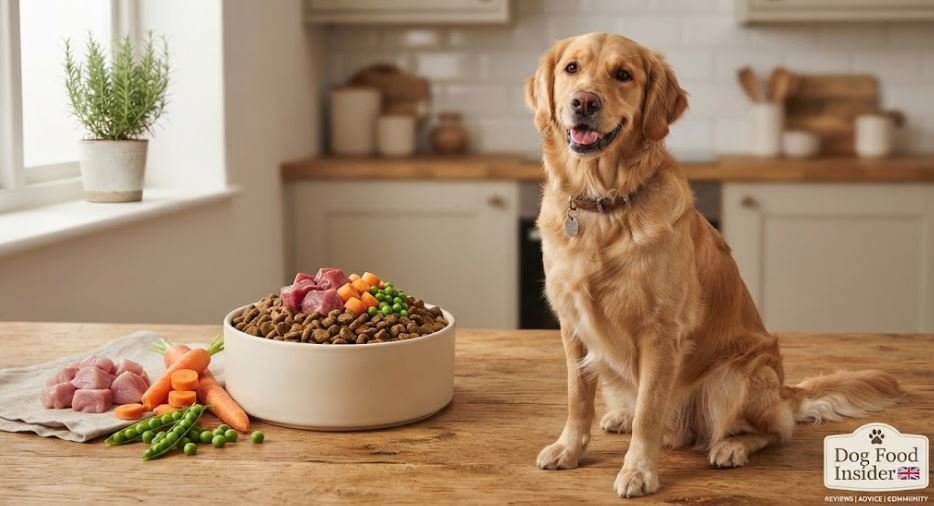
Kibble is a type of dry, shelf-stable dog food that is processed and shaped into small, bite-sized, crunchy pellets. Manufactured through a high-pressure cooking process called extrusion, kibble combines ground meats, grains, vegetables, vitamins, and minerals into nutritionally balanced portions tailored for daily canine feeding.
Unlike canned wet food or raw diets, kibble contains low moisture levels (typically around 10%), making it highly convenient, budget-friendly, and easy to store without refrigeration. At Dog Food Insider, our nutritional guides help pet owners evaluate ingredient profiles to ensure their dogs receive optimal daily health benefits from their daily diet.
Common Types of Kibble and Manufacturing Methods
Commercial dog kibble comes in several formulations designed to meet specific canine needs:
-
Standard Extruded Kibble: Ingredients are mixed, cooked under steam and pressure, forced through a die to form shapes, and spray-coated with fats and flavorings for high palatability.
-
Cold-Pressed Kibble: Ingredients are gently pressed at lower temperatures to preserve natural nutrients and heat-sensitive enzymes.
-
Air-Dried & Baked Kibble: Slow-cooked at lower heat to retain raw nutrient profiles while offering the shelf stability of traditional dry pet food pellets.
-
Specialty Formula Kibble: Grain-free, hypoallergenic, puppy, senior, or breed-specific kibbles tailored to precise dietary restrictions.
How Kibble Is Made: The Extrusion Process
Kibble isn’t just baked like a biscuit; it undergoes a precise industrial preparation to ensure safety and balance. Understanding the manufacturing steps helps pet parents choose quality formulas:
-
Grinding & Blending: Raw meats, grains, legumes, and nutrient pre-mixes are ground into a fine flour and evenly mixed.
-
Thermal Extrusion: The mixture enters an extruder where high steam pressure cooks the carbohydrates into digestible starches.
-
Shaping & Drying: The dough is pushed through shaping dies, cut into bite-sized pieces, and dried in ovens to reduce moisture below 10%.
-
Enrobing & Cooling: The dried pieces are sprayed with essential fats, oils, and natural flavor enhancers to boost taste before packaging.
Why Choose High-Quality Kibble for Your Dog?
While kibble offers maximum feeding convenience, quality varies significantly between brands. At Dog Food Insider UK, we recommend inspecting labels for real meat proteins as the primary ingredient rather than excessive fillers or artificial preservatives. Premium kibble provides dental abrasion to help reduce tartar buildup, precise caloric control, and complete, balanced nutrition for every stage of your dog’s life.
Looking for expert reviews on the best dry dog foods? Visit Dog Food Insider today for unbiased nutritional breakdowns, ingredient comparisons, and feeding guides to keep your dog thriving.