
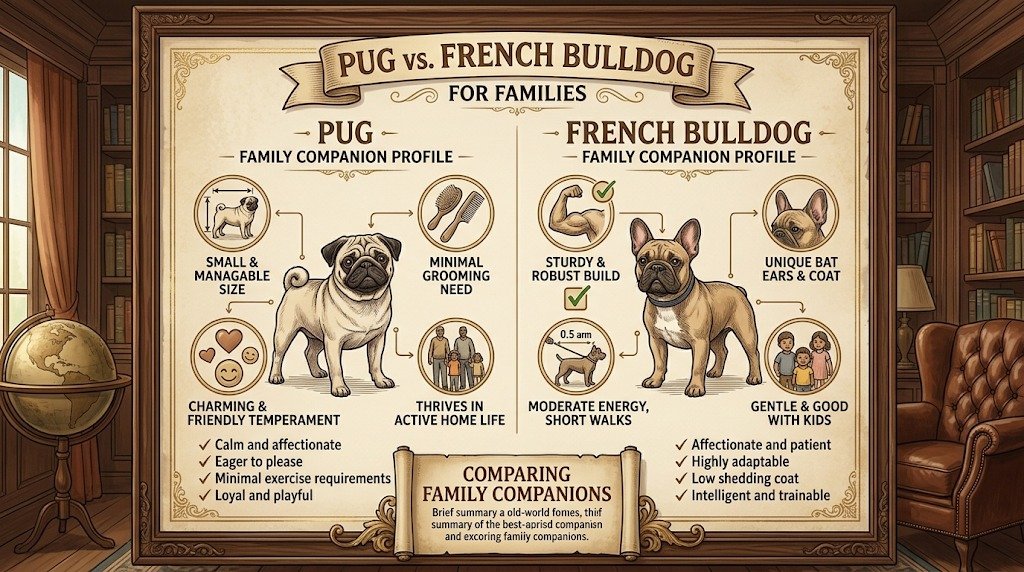
Both Pugs and French Bulldogs make great family pets because they are affectionate, friendly, and well-suited for indoor living. However, they have distinct differences in temperament, maintenance, and health needs. When families seek small, charming companion dogs that thrive in apartments or suburban homes without requiring miles of daily running, these two brachycephalic breeds frequently emerge as top contenders.
When prospective pet owners search for guidance on pug vs french bulldog for families, they need objective, veterinary-backed insights rather than surface-level impressions. At Dog Food Insider, we follow evidence-based canine behavior and health principles to help you evaluate small pet suitability and select the ideal companion for your household.
Understanding the Pug
The Pug is an ancient, noble companion breed celebrated for its playful clownishness, expressive wrinkle-filled face, and deep devotion to human family members.
Key Characteristics of Pugs:
-
Affectionate and Social: Pugs adore being the center of attention and form deep emotional bonds with children and adults alike.
-
Low-Impact Exercise Needs: Because of their compact size and short snouts, they do not require intense outdoor running, making them wonderful for indoor play.
-
Compact and Sturdy: Pugs possess a surprisingly solid, muscular frame beneath their soft coats, allowing them to handle gentle family games easily.
Potential Challenges:
-
Heavy Shedding: Despite their short hair, Pugs shed a surprising amount of fine fur year-round, requiring regular brushing.
Understanding the French Bulldog
The French Bulldog (Frenchie) is a stylish, modern favorite known for its bat-like ears, muscular build, and laid-back, comical personality.
Key Characteristics of French Bulldogs:
-
Quiet and Laid-Back: Frenchies are relatively quiet dogs that rarely bark unprovoked, making them exceptional choices for apartment or condo living.
-
Adaptable and Playful: They love interacting with children and possess a sturdy build that withstands normal household activity without fragility.
-
Low Grooming Maintenance: Their short single coats require minimal brushing compared to heavier shedding breeds.
Potential Challenges:
-
Stubborn Streak: Frenchies can exhibit a stubborn independent streak during obedience training, requiring patience and positive reinforcement.
Direct Comparison: Pug vs. French Bulldog
To help you evaluate pug vs french bulldog for families, review this direct comparative breakdown across essential household criteria:
| Comparison Metric | Pug | French Bulldog |
| Coat & Shedding | Short coat, heavy year-round shedding | Short coat, low-moderate shedding |
| Temperament | Mischievous, clingy, playful clown | Laid-back, quiet, affectionate, alert |
| Exercise Needs | Low (prone to overheating) | Low (indoor play and short walks) |
| Barking Tendency | Low to Moderate | Very Low (exceptionally quiet) |
| Suitability for Children | Excellent (gentle family companion) | Excellent (robust and playful) |
Exploring Breeds and Finding the Ideal Match
While small companion breeds make fantastic family additions, exploring a wide variety of lineage traits helps ensure a perfect match. If you are researching specific purebred characteristics, explore our comprehensive breed database category to understand how different working, herding, and companion dogs behave in domestic settings.
For families seeking wonderful, gentle companions that naturally thrive in child-centric homes, review our expert recommendations in our detailed guide on top dog breeds for families. Conversely, understanding which animals to avoid in chaotic toddler homes is equally vital; review our analysis of the worst dog breeds for families with toddlers.
Health and Care Considerations for Brachycephalic Breeds
Both Pugs and French Bulldogs are flat-faced (brachycephalic) breeds, meaning extra care is mandatory to keep them healthy:
-
Heat Sensitivity: Their shortened airways make both breeds highly susceptible to heat exhaustion and breathing difficulties during hot summer days. Air-conditioned indoor environments are essential.
-
Weight Management: Obesity drastically worsens breathing issues in both Pugs and Frenchies. Strict portion control and balanced nutrition are critical.
-
Wrinkle Hygiene: Both breeds feature facial skin folds that trap moisture and dirt, requiring gentle daily wiping to prevent skin infections.
Nutritional Needs for Small Companion Dogs
Providing balanced, species-appropriate nutrition is vital for supporting your small dog’s metabolic health and lifelong vitality. Before establishing your feeding routine, explore our complete guide on raw meat feeding for dogs to evaluate balanced diet options.
Share Your Insights or Reach Out to Our Team
Do you have experience raising Pugs or French Bulldogs alongside children? We welcome expert veterinary insights and guest contributions. If you are passionate about canine behavior and wellness, feel free to write for us and share your expertise with our growing community.
Have specific questions about family pet safety or nutrition? Contact us today to connect with our editorial team.
Why Choose Dog Food Insider for Canine Guidance?
At Dog Food Insider, we prioritize science-backed canine behavior and family safety to help you make informed decisions for your pet’s wellbeing.
Before introducing new pets into your household, explore our complete feeding guides to ensure your dog thrives throughout life. Looking for tailored guidance for your canine companion? Visit Dog Food Insider today to access expert nutrition calculators, behavioral insights, and personalized advice to keep your family thriving.


Leave a Reply