
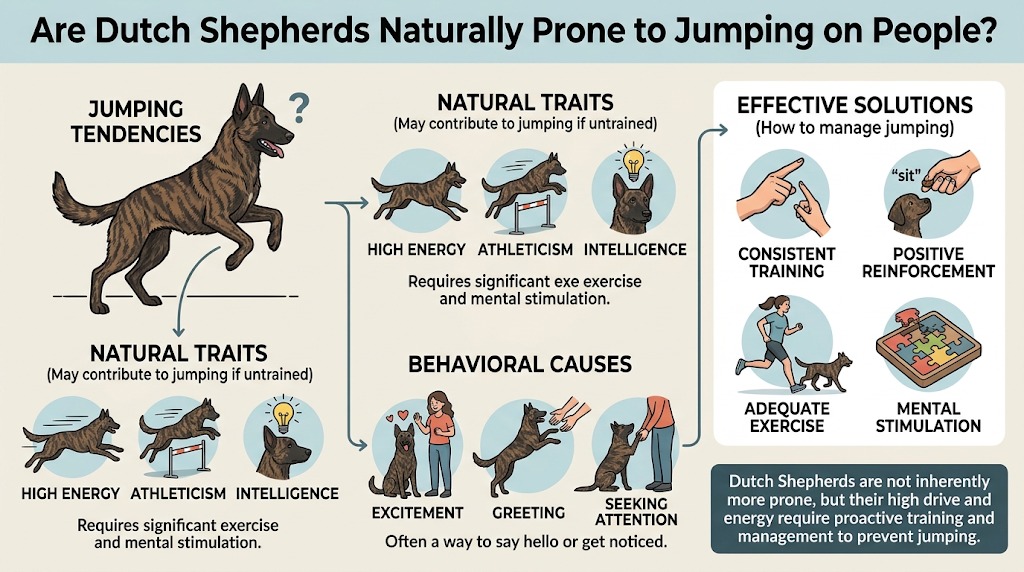
When exploring Are Dutch Shepherds Naturally Prone to Jumping on People?, yes, Dutch Shepherds are naturally prone to jumping on people, primarily due to their intense working drive, high energy, and athletic agility. While they do not jump out of malice, their instinct to greet face-to-face and release pent-up excitement makes jumping a very common behavior without structured training.
When working handlers, active pet owners, and shepherd enthusiasts search for guidance on Are Dutch Shepherds Naturally Prone to Jumping on People?, evaluating canine greeting instincts, explosive hindquarter anatomy, arousal management protocols, and impulse-control training ensures that handlers channel natural athleticism safely without allowing 70-pound adult dogs to knock over guests or family members. At Dog Food Insider, we follow evidence-based canine behavioral models and working breed standards (supported by guidelines from organizations like the American Kennel Club) to help you understand your Dutch Shepherd’s physical instincts, establish reliable greeting manners, and support long-term canine health.
Are Dutch Shepherds Naturally Prone to Jumping on People?: Genetic and Behavioral Drivers
When evaluating Are Dutch Shepherds Naturally Prone to Jumping on People?, looking into the breed’s physical structure and working heritage explains why leaping upward feels completely instinctive to them.
Core Reasons Dutch Shepherds Instinctively Jump:
-
Explosive Athletic Agility: Bred as versatile herding, police, and protection dogs, Dutch Shepherds possess dense fast-twitch muscle fibers and spring-loaded hindquarters that make vertical leaping effortless.
-
Face-to-Face Greeting Instincts: In canine pack communication, younger or subordinate dogs greet returning pack leaders by licking near the muzzle. Because humans stand upright, a Dutch Shepherd naturally jumps up to reach eye and face level.
-
High-Drive Arousal Spikes: Dutch Shepherds experience rapid adrenaline surges when greeting their primary handler or welcoming visitors; jumping acts as an immediate physical valve to discharge pent-up excitement.
-
Accidental Human Reinforcement: Pushing a shepherd’s paws off your chest, yelling “Down!”, or engaging in rough play inadvertently rewards the jump with touch and attention, cementing the behavior into a daily habit.
Are Dutch Shepherds Naturally Prone to Jumping on People?: Channeling Natural Jumping Safely
Understanding Are Dutch Shepherds Naturally Prone to Jumping on People? requires teaching clear boundaries so your dog learns when leaping is appropriate (such as agility or bite-work) and when calm ground manners are mandatory.
Proven Methods to Curb Unwanted Jumping:
-
Enforce the “Four on the Floor” Rule: Withhold all eye contact, verbal praise, and petting until all four of your dog’s paws are planted firmly on the ground.
-
Teach an Incompatible Greeting Behavior (“Sit” or “Place”): Cue a reliable “Sit” before opening doors or offering affection; a shepherd cannot launch into the air while holding a structured sit.
-
Use Pre-Emptive Toy Redirection: Keep a durable tug toy near the front entryway and present it as your shepherd approaches, giving their mouth and drive a structured task instead of jumping on people.
-
Provide Structured Athletic Outlets: Channel their natural jumping drive constructively through dog sports like agility, dock diving, or structured fetch once their growth plates close around 18 to 24 months.
Direct Comparison: Jumping Propensity Across Working & Companion Breeds
To help you answer Are Dutch Shepherds Naturally Prone to Jumping on People?, review this direct comparative breakdown of natural jumping drive, greeting arousal levels, athletic leap capacity, and training effort required:
| Dog Breed | Natural Jumping Propensity | Greeting Arousal Level | Vertical Leap Capability | Training Effort to Curb Jumping |
| Dutch Shepherd | Very High (Instinctive & Athletic) | Extreme (Rapid Adrenaline Spike) | 8+ Feet (Explosive Power) | High (Needs Impulse Control) |
| Belgian Malinois | Very High | Extreme | 8 to 9 Feet | High to Extreme |
| Boxer | High (Bouncy Greeting Style) | High | 5 to 6 Feet | Moderate to High |
| English Bulldog | Low (Heavy, Grounded Frame) | Low to Moderate | Minimal (1 to 2 Feet) | Low |
Exploring Breeds and Finding the Ideal Match
While exploring questions like Are Dutch Shepherds Naturally Prone to Jumping on People? highlights working-breed athleticism and impulse management, evaluating overall breed suitability ensures a safe match for your household dynamic. If you are researching specific purebred working traits or alternative family companions, explore our comprehensive breed database category to understand how different working, herding, and guard breeds behave in domestic settings.
For families seeking wonderful, gentle companions that naturally display calmer, grounded greeting manners around children and guests, review our expert recommendations in our detailed guide on top dog breeds for families. Conversely, understanding which high-drive herding and guardian animals require rigorous physical boundary training around young children is equally vital; review our analysis of the worst dog breeds for families with toddlers.
Practical Rules for Managing a High-Jumping Dutch Shepherd
To protect both your guests and your dog’s long-term orthopedic health, strictly adhere to these handler rules:
-
Never Encourage Jumping During Puppyhood: Allowing a cute 15-pound puppy to jump on your legs guarantees a dangerous 70-pound adult leaper later on; enforce polite manners from day one.
-
Protect Developing Growth Plates: Discourage repetitive vertical jumping on hardwood or concrete surfaces until your Dutch Shepherd reaches 18 to 24 months of age to prevent elbow and hip trauma.
-
Use a House Leash Around Visitors: Clip a lightweight 6-foot leash onto your shepherd’s collar before guests enter so you can calmly prevent leaping without resorting to yelling or pushing.
Nutritional Needs to Support Joint Resilience and Balanced Energy
Providing balanced, species-appropriate working-breed nutrition rich in clean animal proteins, natural glucosamine and chondroitin, calibrated minerals, and essential omega-3 fatty acids (EPA/DHA) protects joints from high-impact athletic movement while supporting steady cognitive focus during training. Before establishing your dog’s feeding routine, explore our complete guide on raw meat feeding for dogs to evaluate balanced diet options.
Share Your Insights or Reach Out to Our Team
How do you manage your Dutch Shepherd’s natural jumping drive during greetings? We welcome expert working handler insights, trainer tips, and guest contributions. If you are passionate about shepherd obedience and working breed care, feel free to write for us and share your expertise with our growing community.
Have specific questions about Dutch Shepherd behavior or working breed nutrition? Contact us today to connect with our editorial team.
Why Choose Dog Food Insider for Canine Guidance?
At Dog Food Insider, we prioritize science-backed canine care and honest training advice to help you make informed decisions for your pet’s wellbeing.
Before introducing a high-drive working breed like a Dutch Shepherd into your home, explore our complete feeding guides to ensure your dog thrives throughout life. Looking for tailored guidance for your canine companion? Visit Dog Food Insider today to access expert nutrition calculators, behavioral insights, and personalized advice to keep your family thriving.







Leave a Reply