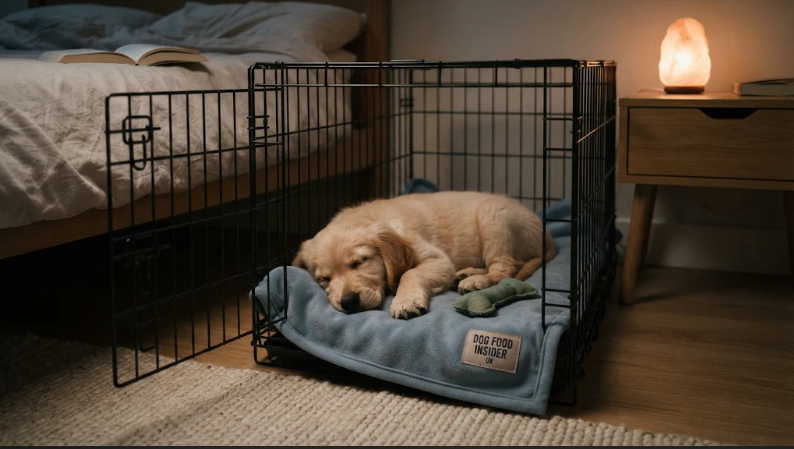
Yes, you should put your 8 week old puppy in a crate at night. Using a properly sized crate prevents nighttime chewing accidents, establishes a predictable sleep routine, and accelerates housebreaking by tapping into your puppy’s natural instinct to keep their sleeping area clean.
However, an 8 week old puppy cannot hold their bladder for a full night and will require one to two scheduled toilet breaks. At
Dog Food Insider, our canine care guides follow positive reinforcement principles to ensure your puppy views their crate as a safe den rather than a punishment.
Key Benefits of Nighttime Crate Training at 8 Weeks
Crate training during the first few weeks at home provides immediate safety and behavioral structure:
-
Faster Housebreaking: Puppies instinctively avoid soiling where they sleep, signaling when they need to go outside.
-
Overnight Safety: Prevents unsupervised roaming, electrical cord chewing, and ingestion of household hazards.
-
Reduced Separation Anxiety: Placing the crate next to your bed reassures your puppy with your scent and breathing.
-
Structured Sleep Schedule: Helps establish clear boundaries between active daytime play and quiet nighttime rest.
-
Travel and Vet Readiness: Prepares your puppy early for safe car transport and calm veterinary stays.
The Nighttime Routine: How to Set Up Your Puppy for Success
You should never lock an untrained puppy inside a crate without positive preparation and proper sizing. To prevent distress and overnight accidents, our
comprehensive puppy care resources recommend following these essential steps:
-
Proper Crate Sizing: Use a divider panel so your puppy has just enough room to stand up, turn around, and lie down comfortably.
-
Bedside Placement: Keep the crate right beside your bed for the first few weeks so you can hear early signs of restlessness.
-
Scheduled Potty Breaks: Set an alarm every 2 to 3 hours for calm, business-only toilet trips without playtime or excitement.
-
Evening Feeding Cutoff: Remove food and water 2 to 3 hours before bedtime to minimize overnight bladder pressure.
Why Trust Dog Food Insider for Your Puppy’s Early Development?
While generic pet blogs often given conflicting advice on crate schedules,
our puppy training and nutrition guides combine proven behavioral routines with stage specific dietary planning. We break down every milestone from feeding schedules and portion sizing to vaccination timelines so you can raise a confident, healthy dog without guesswork. If your puppy cries persistently at night, check for physical needs first before reassuring them calmly from bedside.
Looking for a complete feeding and daily routine to pair with your crate training?














Leave a Reply