
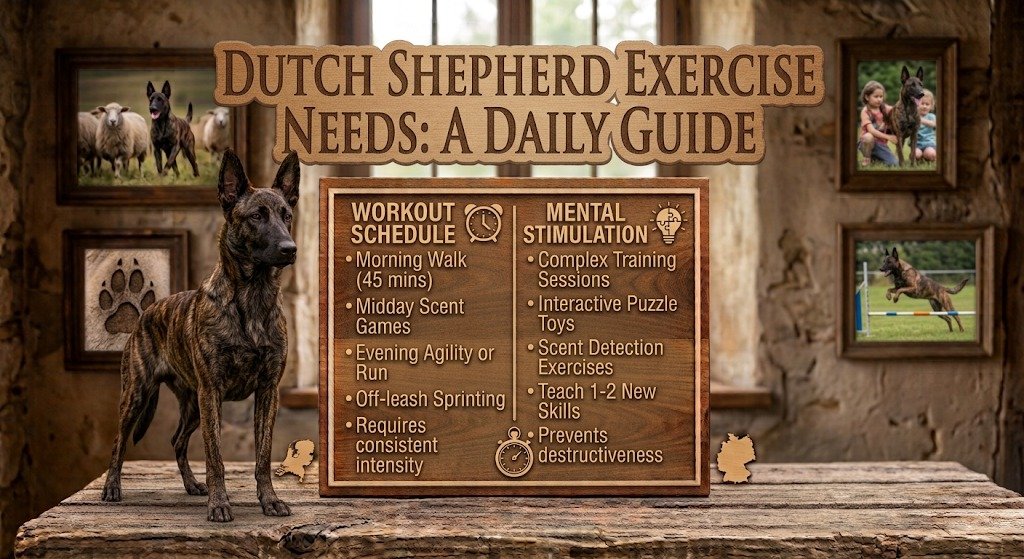
When exploring How Much Exercise Do Dutch Shepherds Need?, Dutch Shepherds need 60 to 90 minutes (up to 2 hours) of vigorous physical exercise and mental stimulation every single day. Because they are a high-energy working breed, casual walks around the block are not enough. They thrive when given a “job” to do.
When working-dog enthusiasts, active handlers, and prospective pet parents search for guidance on How Much Exercise Do Dutch Shepherds Need?, having clear, structured activity protocols ensures these athletic sighthound-fast herders maintain peak mental and physical condition. At Dog Food Insider, we follow evidence-based veterinary care standards (supported by guidelines from organizations like the American Kennel Club) to help you design effective exercise schedules, prevent destructive behaviors, and keep your working herder healthy throughout life.
How Much Exercise Do Dutch Shepherds Need?: Physical vs. Mental Stimulation
When evaluating How Much Exercise Do Dutch Shepherds Need?, recognizing the difference between physical activity and mental engagement is crucial. Physical outlets drain raw kinetic energy, but mental tasks burn brainpower and satisfy their innate working drive.
Core Exercise Components:
-
Vigorous Aerobic Exercise (45 to 60 Minutes Daily): High-speed running, fetch sessions, bike skijoring, swimming, or trail running allow them to stretch their athletic muscles fully.
-
Structured Mental Jobs (30 to 45 Minutes Daily): Advanced obedience drills, scent work, tracking games, and complex puzzle toys prevent boredom and indoor anxiety.
-
Canine Sports Engagement: Excelling in Schutzhund, Mondioring, agility, flyball, or dock diving provides the perfect hybrid of physical exertion and task focus.
How Much Exercise Do Dutch Shepherds Need?: Age-Based Activity Guidelines
Understanding How Much Exercise Do Dutch Shepherds Need? also requires tailoring exercise intensity to your dog’s specific growth stage to protect developing joints and skeletal structures.
Activity Levels Across Life Stages:
-
Puppies (2 to 12 Months): Follow the “5-minute rule” per month of age twice daily (e.g., a 4-month-old puppy gets 20 minutes per session) of gentle, unforced play to safeguard growing growth plates.
-
Prime Working Adults (1 to 7 Years): Require the full 90 to 120 minutes of intense daily physical exertion combined with challenging mental tasks.
-
Senior Dutch Shepherds (8+ Years): Transition to lower-impact activities like swimming, extended scent walks, and moderate-distance hikes to protect aging joints while keeping their sharp minds active.
Direct Comparison: Activity Requirements Across Herding Breeds
To help you answer How Much Exercise Do Dutch Shepherds Need?, review this direct comparative breakdown of daily activity needs across popular working herding breeds:
| Working Herding Breed | Daily Physical Activity | Daily Mental Stimulation Needs | Ideal Exercise Outlets |
| Dutch Shepherd | 60 to 90+ Minutes | High to Extreme | Running, Schutzhund, Agility, Scent Work |
| Belgian Malinois | 90 to 120+ Minutes | Extreme | Ring Sport, Bite Work, High-Speed Agility |
| German Shepherd | 60 to 90 Minutes | Moderate to High | Obedience Drills, Tracking, Long Hikes |
| Border Collie | 90 to 120 Minutes | Extreme | Livestock Herding, Frisbee, Flyball |
Exploring Breeds and Finding the Ideal Match
While exploring questions like How Much Exercise Do Dutch Shepherds Need? highlights physical stamina, evaluating overall breed suitability ensures a safe match for your home. If you are researching specific purebred working traits or alternative family companions, explore our comprehensive breed database category to understand how different working, herding, and guard breeds behave in domestic settings.
For families seeking wonderful, gentle companions that naturally thrive in child-centric homes, review our expert recommendations in our detailed guide on top dog breeds for families. Conversely, understanding which high-drive working animals require specialized handling in chaotic toddler homes is equally vital; review our analysis of the worst dog breeds for families with toddlers.
Practical Rules for Preventing Over-Exercising and Heat Stress
While meeting daily activity goals is vital, managing recovery and environmental safety protects your working dog:
-
Beware of Overheating: Because Dutch Shepherds give 100% effort regardless of fatigue, monitor them closely during warm weather for heavy panting or lethargy.
-
Warm Up and Cool Down: Incorporate 5 minutes of light walking before and after intense sprinting sessions to prevent muscle strains and soft tissue injuries.
-
Enforce Rest Periods Before and After Meals: Avoid heavy exercise for at least 1 hour before and after large meals to reduce the risk of bloat (GDV).
Nutritional Needs to Fuel High-Energy Working Dogs
Providing balanced, species-appropriate nutrition rich in clean animal proteins, complex fats, and joint-supporting nutrients fuels the massive caloric burn of an active Dutch Shepherd. Before establishing your dog’s feeding routine, explore our complete guide on raw meat feeding for dogs to evaluate balanced diet options.
Share Your Insights or Reach Out to Our Team
Do you have experience managing the daily exercise routine of a Dutch Shepherd? We welcome expert veterinary insights, working dog tips, and guest contributions. If you are passionate about canine athletics and working breeds, feel free to write for us and share your expertise with our growing community.
Have specific questions about working-breed care or nutrition? Contact us today to connect with our editorial team.
Why Choose Dog Food Insider for Canine Guidance?
At Dog Food Insider, we prioritize science-backed canine care and honest exercise guidance to help you make informed decisions for your pet’s wellbeing.
Before introducing new high-intensity routines into your household, explore our complete feeding guides to ensure your dog thrives throughout life. Looking for tailored guidance for your canine companion? Visit Dog Food Insider today to access expert nutrition calculators, behavioral insights, and personalized advice to keep your family thriving.



Leave a Reply