
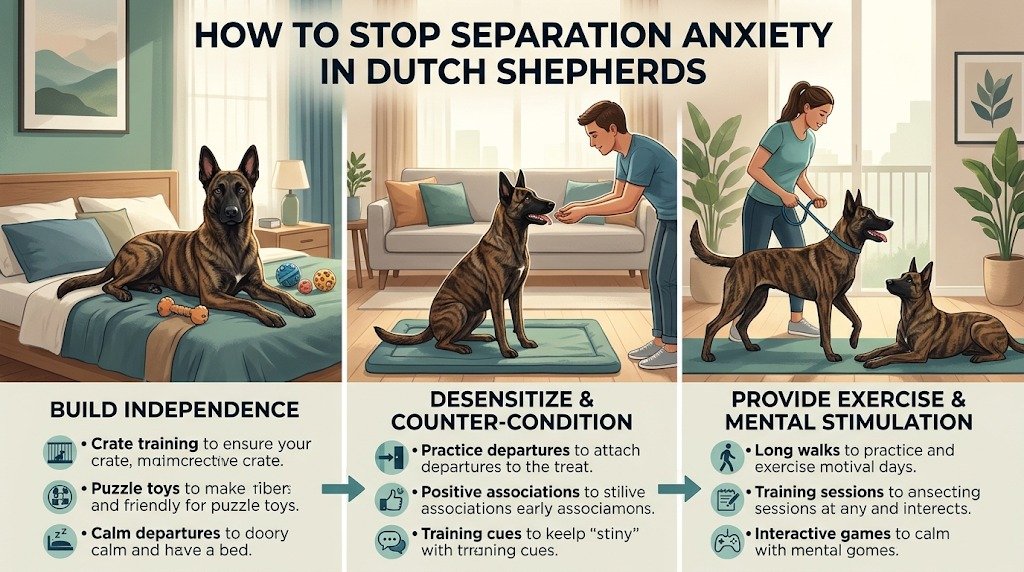
When exploring How to Stop Separation Anxiety in Dutch Shepherds, to stop separation anxiety in a Dutch Shepherd, you must combine high physical and mental exercise with structured desensitization training to build independence. Dutch Shepherds are high-energy, working-drive dogs that form intense attachments, making early intervention and consistency vital.
When working-dog handlers, pet parents, and European shepherd owners search for guidance on How to Stop Separation Anxiety in Dutch Shepherds, implementing structured daily workouts, progressive departure desensitization, independence conditioning, and calm exit routines ensures your high-drive companion feels secure when home alone. At Dog Food Insider, we follow evidence-based canine behavior and veterinary care standards (supported by guidelines from organizations like the American Kennel Club) to help you eliminate isolation distress, establish strong behavioral boundaries, and foster long-term working shepherd wellness.
How to Stop Separation Anxiety in Dutch Shepherds: Step-by-Step Desensitization Protocol
When evaluating How to Stop Separation Anxiety in Dutch Shepherds, following a systematic behavioral modification plan removes the emotional panic associated with an owner’s departure.
Core Desensitization Steps:
-
Neutralize Departure Cues: Pick up your keys, put on your coat, and touch the door handle multiple times a day without actually leaving. This breaks the predictive association between these triggers and your absence.
-
Practice Micro-Absences: Step outside the front door for just 10 to 30 seconds before re-entering calmly. Gradually increase the duration to a few minutes, only advancing when your shepherd remains totally relaxed.
-
Maintain Low-Key Exits and Arrivals: Ignore your dog for the first few minutes upon returning home and keep exits unemotional. Waiting until your shepherd is in a calm, settled state before offering affection prevents arousal spikes.
How to Stop Separation Anxiety in Dutch Shepherds: Exercise and Mental Enrichment
Understanding How to Stop Separation Anxiety in Dutch Shepherds also requires recognizing that an under-exercised, under-stimulated working dog accumulates physical tension that manifests as panic when left alone.
Key Enrichment and Independence Outlets:
-
Provide High-Intensity Morning Exercise: Drain your Dutch Shepherd’s energy reserves before you leave by providing 45 to 60 minutes of running, fetch, or obedience drills paired with scent work.
-
Utilize Long-Lasting Occupational Toys: Leave frozen KONGs stuffed with peanut butter, puzzle feeders, or lick mats right as you walk out the door. The physical act of licking and chewing releases calming endorphins in the canine brain.
-
Condition Daily “Place” Duration: Teach your shepherd to lie quietly on a dedicated bed or mat in another room while you are home, reinforcing spatial independence throughout the day.
Direct Comparison: Anxiety Management Across European Working Shepherds
To help you answer How to Stop Separation Anxiety in Dutch Shepherds, review this direct comparative breakdown of behavioral triggers, desensitization difficulty, and exercise requirements across major herding breeds:
| European Working Breed | Separation Anxiety Vulnerability | Desensitization Effort Level | Daily Physical Exercise Need | Primary Behavior Modification Focus |
| Dutch Shepherd | Moderate to High | High (Requires Consistency) | 2+ Hours / Day | Desensitization & Drive Outlets |
| Belgian Malinois | Extremely High | Very High / Intensive | 2.5+ Hours / Day | White-Hot Drive & Crate Protocols |
| German Shepherd | High | Moderate to High | 1.5+ Hours / Day | Confidence Building & Routine |
| Cavalier King Charles | High (Companion) | Moderate | Gentle Daily Walks | Gradual Alone-Time Association |
Exploring Breeds and Finding the Ideal Match
While exploring questions like How to Stop Separation Anxiety in Dutch Shepherds highlights working-dog behavioral management, evaluating overall breed suitability ensures a safe match for your living space. If you are researching specific purebred working traits or alternative family companions, explore our comprehensive breed database category to understand how different working, herding, and guard breeds behave in domestic settings.
For families seeking wonderful, gentle companions that naturally thrive in household settings, review our expert recommendations in our detailed guide on top dog breeds for families. Conversely, understanding which high-drive working animals require specialized handling and time commitment is equally vital; review our analysis of the worst dog breeds for families with toddlers.
Practical Rules for Long-Term Behavioral Success
To ensure your Dutch Shepherd maintains emotional balance during alone time over the long term, follow these practical rules:
-
Avoid Punishing Anxiety-Driven Destruction: Never scold or punish a dog for accidents or chewed objects upon returning home, as this increases their fear of your arrival.
-
Establish a Secure Crate or Safe Zone: Use a heavy-duty crate or dog-proofed room with comfortable bedding and ambient white noise to create a safe sanctuary.
-
Consult Professional Behaviorists Early: If your shepherd exhibits severe panic, self-injury, or relentless howling, partner with a certified veterinary behaviorist for specialized intervention.
Nutritional Needs to Fuel Brain Health and Stress Balance
Providing balanced, species-appropriate nutrition rich in clean animal proteins, essential omega-3 fatty acids (EPA/DHA) for cognitive stability, and B-complex vitamins for nervous system support helps lower overall anxiety levels in active dogs. Before establishing your dog’s feeding routine, explore our complete guide on raw meat feeding for dogs to evaluate balanced diet options.
Share Your Insights or Reach Out to Our Team
Do you have experience managing separation anxiety in a Dutch Shepherd? We welcome expert veterinary insights, behaviorist tips, and guest contributions. If you are passionate about working dog behavior and canine welfare, feel free to write for us and share your expertise with our growing community.
Have specific questions about working shepherd training or calming nutrition? Contact us today to connect with our editorial team.
Why Choose Dog Food Insider for Canine Guidance?
At Dog Food Insider, we prioritize science-backed canine care and honest behavioral advice to help you make informed decisions for your pet’s wellbeing.
Before addressing behavioral challenges or starting desensitization training with your shepherd, explore our complete feeding guides to ensure your pet thrives throughout life. Looking for tailored guidance for your canine companion? Visit Dog Food Insider today to access expert nutrition calculators, behavioral insights, and personalized advice to keep your family thriving.






Leave a Reply