
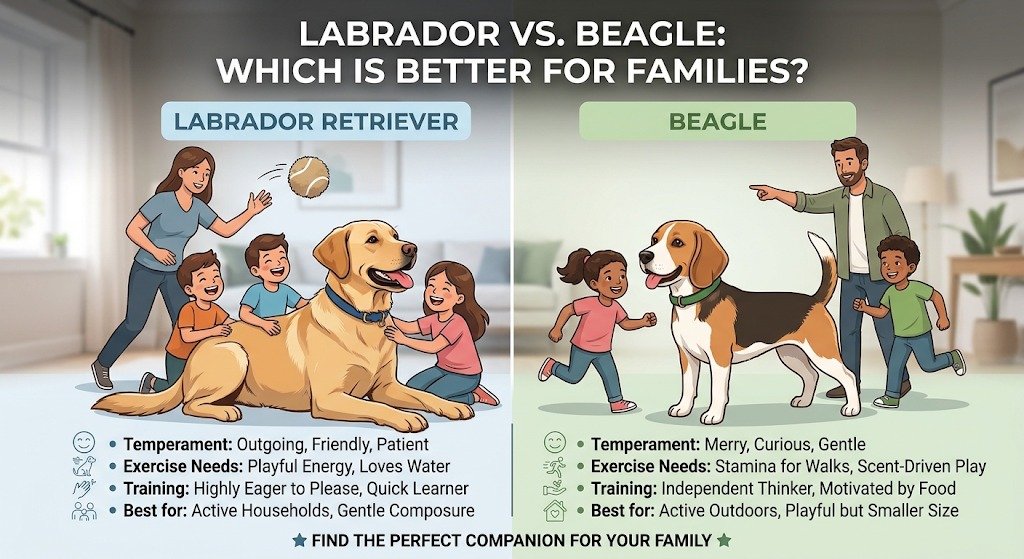
Labrador vs beagle for families is one of the most critical comparisons prospective pet owners make when choosing a friendly, loyal, and child-safe canine companion. Both Labrador Retrievers and Beagles make wonderful family pets, but the Labrador Retriever is generally considered better and easier for most households, especially first-time owners.
When prospective pet owners search for guidance on labrador vs beagle for families, they need objective, veterinary-backed insights rather than surface-level impressions. At Dog Food Insider, we follow evidence-based canine behavior and health principles (supported by industry standards from organizations like the American Kennel Club) to help you evaluate family pet suitability and select the ideal companion for your household.
Understanding Labrador vs Beagle for Families: The Labrador Retriever
When evaluating labrador vs beagle for families, examining the Labrador Retriever reveals why it holds the crown as a global favorite. Labs are celebrated worldwide for their warm friendliness, high intelligence, and unconditional love for children and strangers alike.
Common Characteristics of Labrador Retrievers:
-
Universal Friendliness: Labs greet almost everyone with a wagging tail, making them exceptionally welcoming in homes with frequent visitors and active children.
-
Eager to Please: Their high trainability makes obedience training straightforward and rewarding, even for novice dog owners.
-
Athletic and Playful: They possess a joyful, bouncy energy that thrives during outdoor games, swimming, and family retrieving activities.
Potential Challenges with Labs:
-
High Adolescent Energy: Without consistent daily exercise, young Labs can become rambunctious or overly exuberant indoors due to their large size.
Understanding Labrador vs Beagle for Families: The Beagle
Another critical pillar when comparing labrador vs beagle for families is the Beagle. The Beagle is a cheerful, sturdy scent hound bred originally to hunt in packs, famous for its soulful eyes, floppy ears, and legendary sense of smell.
Common Characteristics of Beagles:
-
Sturdy and Resilient: Beagles are robust, solid little dogs that handle active children and rough games without fragility.
-
Friendly and Social: They adore human companionship, thrive in multi-pet or multi-child homes, and rarely show unprovoked aggression.
-
Independent Explorers: Inheriting strong tracking instincts, Beagles love investigating outdoor scents, which gives them an adventurous streak.
Potential Challenges with Beagles:
-
Independent Tracking Drive: Because their nose dictates their focus, Beagles can be stubborn during obedience training and require secure fenced yards or leashes.
Direct Comparison: Labrador vs. Beagle
To help you evaluate labrador vs beagle for families, review this direct comparative breakdown across essential household criteria:
| Comparison Metric | Labrador Retriever | Beagle |
| Size & Weight | Large (55–75 lbs) | Medium (20–30 lbs) |
| Trainability | Extremely high (eager to please) | Independent (scent-driven focus) |
| Barking Tendency | Low to Moderate | High (baying and howling instincts) |
| Grooming Needs | Moderate (thick water-resistant coat) | Low (short, easy-maintenance coat) |
| Suitability for Families | Exceptional for all active home types | Great for families wanting a smaller dog |
Exploring Breeds and Finding the Ideal Match
While popular family breeds make fantastic companions, exploring a wide variety of lineage traits helps ensure a perfect match. If you are researching specific purebred characteristics, explore our comprehensive breed database category to understand how different working, herding, and companion dogs behave in domestic settings.
For families seeking wonderful, gentle companions that naturally thrive in child-centric homes, review our expert recommendations in our detailed guide on top dog breeds for families. Conversely, understanding which animals to avoid in chaotic toddler homes is equally vital; review our analysis of the worst dog breeds for families with toddlers.
Care Considerations: Retrievers vs. Scent Hounds
Managing a Labrador Retriever versus a Beagle involves distinct lifestyle and daily routines:
-
Space Management: While Labs require spacious living arrangements and active outdoor exercise, Beagles adapt well to slightly smaller homes provided their daily scent walks are met.
-
Ear Hygiene: Beagles feature long, floppy ears that trap moisture easily, requiring routine weekly cleaning to prevent painful ear infections compared to Labs.
-
Food Motivation: Both breeds love food intensely and can be prone to weight gain if free-fed, making strict measured portion control essential for both.
Nutritional Needs for Family Dogs
Providing balanced, species-appropriate nutrition is vital for supporting your dog’s joint health, coat condition, and lifelong vitality. Before establishing your feeding routine, explore our complete guide on raw meat feeding for dogs to evaluate balanced diet options.
Share Your Insights or Reach Out to Our Team
Do you have experience raising Labradors or Beagles alongside children? We welcome expert veterinary insights and guest contributions. If you are passionate about canine behavior and wellness, feel free to write for us and share your expertise with our growing community.
Have specific questions about family pet safety or nutrition? Contact us today to connect with our editorial team.
Why Choose Dog Food Insider for Canine Guidance?
At Dog Food Insider, we prioritize science-backed canine behavior and family safety to help you make informed decisions for your pet’s wellbeing.
Before introducing new pets into your household, explore our complete feeding guides to ensure your dog thrives throughout life. Looking for tailored guidance for your canine companion? Visit Dog Food Insider today to access expert nutrition calculators, behavioral insights, and personalized advice to keep your family thriving.


Leave a Reply