
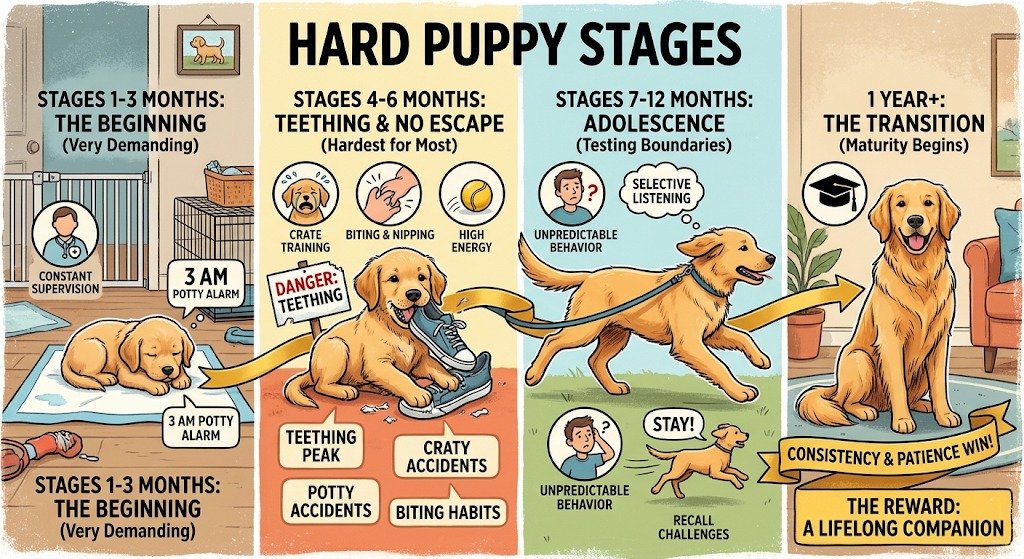
When exploring What age is the hardest puppy stage?, the hardest puppy stage typically falls between 6 and 18 months, known as the adolescent or “teenage” phase. Dog owners and trainers generally divide the hardest periods into two main camps depending on the challenges faced.
When prospective dog owners, new puppy parents, and active handlers search for guidance on What age is the hardest puppy stage?, evaluating physical exhaustion peaks during early babyhood, teenage hormonal surges, boundary testing, and impulse control protocols ensures that handlers navigate these developmental milestones with confidence. At Dog Food Insider, we follow evidence-based canine behavioral models and veterinary development standards (supported by guidelines from organizations like the American Kennel Club) to help you manage puppy developmental hurdles, maintain consistent training routines, and support long-term canine health.
What age is the hardest puppy stage?: The Two Major Hardship Camps
When evaluating What age is the hardest puppy stage?, understanding why different owners experience peak difficulty at different times depends entirely on whether they struggle more with physical fatigue or behavioral defiance.
1. The Baby Stage (8 to 16 Weeks) — Physical Exhaustion Camp:
-
Sleep Deprivation and Night Crying: Separated from their mother and littermates, baby puppies require constant night trips due to tiny bladder capacities, leaving owners severely sleep-deprived.
-
Potty Training & Constant Supervision: Housebreaking vigilance, cleaning frequent indoor accidents, and stopping sharp needle-tooth teething bites create high physical fatigue.
-
Physical Management: While exhausting, baby puppies are physically small and easily contained or redirected.
2. The Adolescent Stage (6 to 18 Months) — Behavioral Rebellion Camp:
-
Hormonal Surges and Defiance: Cited by professional behaviorists as the true hardest age, teenage dogs experience floods of testosterone or estrogen that drive sudden selective hearing and boundary pushing.
-
Peak Energy with Adult Size: Managing an energetic 50 to 90-pound teenage dog that pulls on leash, jumps, or counter-surfs presents far greater real-world frustration than managing a small 8-week-old pup.
-
Secondary Fear Phases: Sudden insecurity or reactive barking toward novel objects or strangers often emerges during this window.
What age is the hardest puppy stage?: Developmental Comparison
Understanding What age is the hardest puppy stage? requires tracking how a puppy’s brain, energy levels, and social drives evolve across their growth timeline.
Timeline of Puppy Difficulty Levels:
-
8 to 12 Weeks (Homecoming Phase): Peak sleep deprivation, potty training setup, and crate adaptation.
-
3 to 5 Months (Teething Window): Intense oral discomfort, chewing furniture, and razor-tooth play nipping.
-
6 to 18 Months (Adolescent Window): Peak behavioral challenge, boundary testing, high independence, and training regression.
-
18 to 24 Months (Maturation Stage): Brain settles, impulse control solidifies, and adult habits lock into place.
Direct Comparison: Puppy Developmental Stages and Difficulty Drivers
To help you answer What age is the hardest puppy stage?, review this direct comparative breakdown of age stages, difficulty ranks, primary hardship drivers, and recommended handler responses:
| Puppy Development Stage | Age Window | Hardship Rank & Category | Primary Hardship Driver | Recommended Handler Strategy |
| Early Babyhood | 8 – 12 Weeks | High (Physical Fatigue) | Night Crying & Potty Schedule | Crate routine & sleep shift sharing |
| Teething Phase | 3 – 5 Months | Moderate (Destructive) | Gum Pain & Play Nipping | Frozen chew toys & redirection |
| Canine Adolescence | 6 – 18 Months | #1 Hardest Overall | Hormonal Defiance & Energy | Strict Boundaries & Impulse Drills |
| Young Adulthood | 18 – 24 Months | Low / Settling | Maturing Drive Refinement | Consistency & Maintenance |
Exploring Breeds and Finding the Ideal Match
While exploring questions like What age is the hardest puppy stage? highlights canine developmental phases, evaluating overall breed suitability ensures a safe match for your living space. If you are researching specific purebred working traits or alternative family companions, explore our comprehensive breed database category to understand how different working, herding, and guard breeds behave in domestic settings.
For families seeking wonderful, gentle companions that naturally thrive in household settings with forgiving puppyhood stages, review our expert recommendations in our detailed guide on top dog breeds for families. Conversely, understanding which high-drive working animals require specialized handling during their turbulent adolescent months is equally vital; review our analysis of the worst dog breeds for families with toddlers.
Practical Rules for Surviving the Hardest Puppy Stages
To navigate both the baby phase and the adolescent phase without owner burnout, strictly adhere to these handler guidelines:
-
Enforce Forced Crate Naps: Overstimulated baby and teenage puppies act out and bite when overtired; ensure they receive 16 to 20 hours of daily rest.
-
Maintain Unwavering Rule Consistency: Never relax household rules during the teenage months; enforcing strict boundaries prevents permanent bad habits.
-
Provide Mental Enrichment Over Pure Physical Running: Combine physical exercise with scent work, puzzle feeders, and trick training to tire out their active brain efficiently.
Nutritional Needs to Fuel Brain Growth and Hormonal Balance
Providing balanced, species-appropriate puppy nutrition rich in clean animal proteins, stable healthy fats, and essential omega-3 fatty acids (DHA/EPA for neurological development) supports emotional regulation, cognitive function, and steady growth through every challenging age stage. Before establishing your puppy’s feeding routine, explore our complete guide on raw meat feeding for dogs to evaluate balanced diet options.
Share Your Insights or Reach Out to Our Team
Which age stage did you find most challenging when raising your dog? We welcome expert veterinary insights, trainer tips, and guest contributions. If you are passionate about canine behavioral science and age-based training protocols, feel free to write for us and share your expertise with our growing community.
Have specific questions about puppy development stages or nutritional support? Contact us today to connect with our editorial team.
Why Choose Dog Food Insider for Canine Guidance?
At Dog Food Insider, we prioritize science-backed canine care and honest behavioral advice to help you make informed decisions for your pet’s wellbeing.
Before introducing a new puppy into your home, explore our complete feeding guides to ensure your dog thrives throughout life. Looking for tailored guidance for your canine companion? Visit Dog Food Insider today to access expert nutrition calculators, behavioral insights, and personalized advice to keep your family thriving.



Leave a Reply