
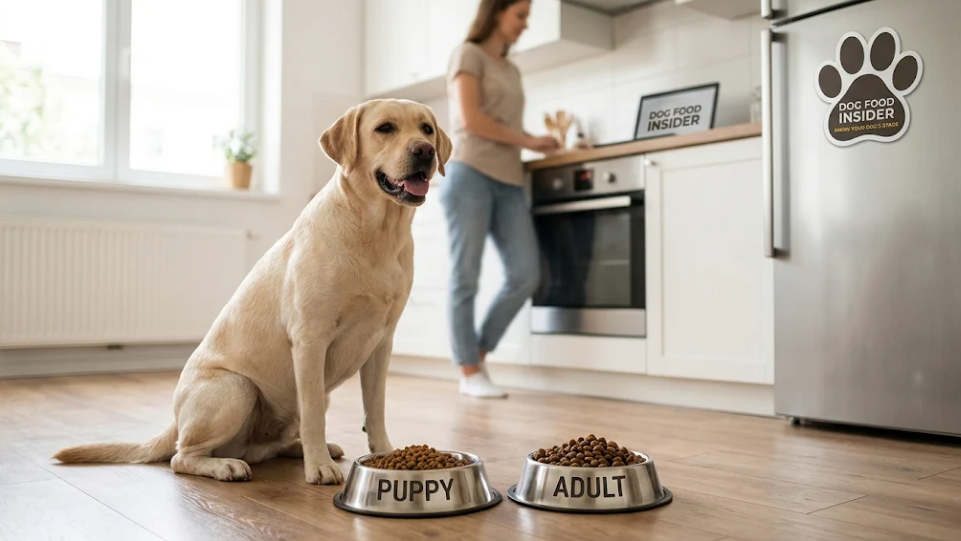
Most dogs no longer need puppy food once they reach 9 to 24 months of age, depending on their expected adult breed size. Small breeds typically transition to adult maintenance formulas around 9 to 12 months, medium breeds around 12 months, and large or giant breeds between 15 and 24 months when their skeletal growth plates finally close.
However, switching diets too early can deprive growing joints and organs of essential nutrients, while feeding calorie-dense puppy kibble for too long can lead to rapid weight gain. At Dog Food Insider, our canine nutrition research emphasizes matching your dog’s life stage to their specific metabolic and developmental milestones.
Transition Timelines by Breed Size
Because skeletal maturity varies drastically across breeds, veterinarians and pet nutritionists categorize the switch from puppy to adult dog food by adult weight:
-
Toy and Small Breeds (Under 10 kg / 22 lbs): Transition between 9 and 12 months. Small dogs reach their full adult height and weight quickly.
-
Medium Breeds (10–25 kg / 22–55 lbs): Transition at 12 months. Most medium-sized dogs finish their primary growth phase right around their first birthday.
-
Large Breeds (25–45 kg / 55–99 lbs): Transition between 15 and 18 months. Slower bone development requires extended nutritional support with controlled calcium-to-phosphorus ratios.
-
Giant Breeds (Over 45 kg / 99 lbs): Transition between 18 and 24 months. Breeds like Great Danes and Mastiffs continue developing bone density for up to two full years.
Key Signs Your Puppy Is Ready for Adult Food
Age is the primary benchmark, but physical and behavioral cues also confirm when it is time to update your canine diet plan. Watch for these indicators:
-
Slowed Physical Growth: Your dog has stopped gaining height and their frame has filled out to match breed standards.
-
Decreased Appetite: A noticeable drop in mealtime enthusiasm often signals that their rapid-growth calorie demands have leveled off.
-
Excess Weight Gain: Softness around the ribs or a disappearing waistline indicates that high-fat puppy formulas are now providing surplus calories.
-
Spaying or Neutering: Sterilization lowers a dog’s resting metabolic rate, meaning many vets recommend shifting to a lower-calorie adult formula shortly after the procedure.
How to Safely Switch to Adult Dog Food
Abruptly changing your dog’s diet can trigger digestive upset, including diarrhea or vomiting. Follow a gradual 7-to-10-day transition schedule to let their gut microbiome adjust to new dog food formulations:
-
Days 1–3: Mix 75% puppy food with 25% adult food.
-
Days 4–6: Feed an equal 50/50 split of puppy and adult food.
-
Days 7–9: Increase to 75% adult food and 25% puppy food.
-
Day 10: Serve 100% adult maintenance food.
Why Choose Dog Food Insider for Your Pet’s Nutrition?
Selecting the right transition window and formula shouldn’t rely on guesswork. At Dog Food Insider, we break down AAFCO and FEDIAF nutritional profiles, ingredient quality, and breed-specific feeding guidelines to help you make confident choices. Whether you are evaluating high-protein kibble or balanced adult dog nutrition, our evidence-based guides simplify every stage of your dog’s life.
Ready to find the best adult formula for your growing pup? Explore Dog Food Insider today for detailed brand reviews, feeding calculators, and expert canine nutrition advice.










Leave a Reply