
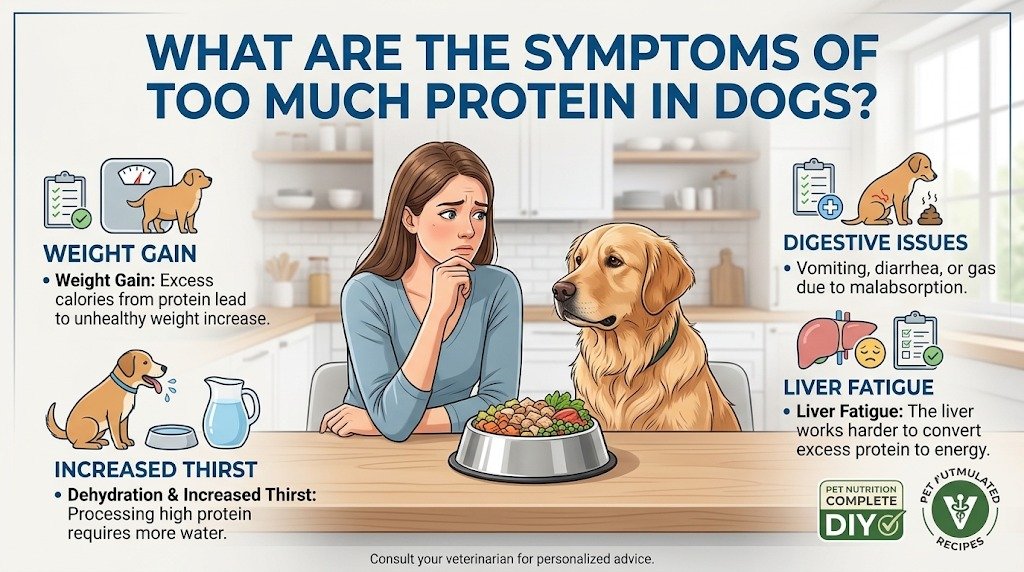
The usual signs are diarrhoea, vomiting, a gurgling stomach, weight gain, and more thirst and urination. Healthy dogs usually cope with high protein well, though, so these signs often point to a sudden diet change, a very rich food or an underlying health problem instead. Here’s how to tell the difference and when to call your vet.
What are the symptoms of too much protein in dogs?
- Loose stools or diarrhoea. This is the most common sign, especially after a sudden switch or in dogs with sensitive stomachs.
- Vomiting or a rumbling stomach.
- Wind and smelly stools.
- Weight gain. Protein your dog doesn’t use can be stored as fat, and rich foods add calories.
- Drinking and weeing more than usual.
- Yellow patches on the lawn, because high protein means more nitrogen in the urine.
Is too much protein actually bad for healthy dogs?
Usually not. In healthy dogs, high protein doesn’t cause kidney disease, although it does make the kidneys work harder to clear waste.
A 90-day study fed healthy adult beagles low (about 19%), medium (about 25%) and high (about 46%) protein diets. The high-protein group showed a shift in gut bacteria and higher levels of some metabolites linked to inflammation and kidney dysfunction. The researchers added that the health effects of high protein aren’t fully established, and the best range for healthy adult dogs isn’t known. For most healthy adults, a complete food at around 30% protein is considered fine.
Which dogs are most at risk?
- Dogs with kidney disease, because high protein can make it worse.
- Dogs with liver disease.
- Dogs with sensitive stomachs, or dogs that have just changed food.
- Dogs prone to pancreatitis, especially if the food is also high in fat.
- Dogs that gain weight easily or get little exercise.
Symptoms that need a vet
| Sign | Could mean | What to do |
|---|---|---|
| Diarrhoea or vomiting lasting more than a day or two, or with blood | Diet change, infection or another illness | Call your vet |
| Drinking and weeing much more, less appetite, tiredness, bad breath | Kidney or other disease, not diet alone | Book a vet check soon |
| Repeated vomiting, weakness, pain or collapse | Possible emergency | See an emergency vet now |
| Yellow lawn patches only | Nitrogen in the urine | Not a worry. Rinse the spot with water |
Is it too much protein, or something else?
Many things look like protein overload. Switching food too fast, a food that’s very rich or fatty, a food allergy, an infection or too many treats can all cause the same signs. Practically any dog food can cause diarrhoea if your dog isn’t used to it. Some dogs are also sensitive to a particular protein source rather than to protein itself. A vet can help you work out which it is.
What to do if you suspect too much protein
- Compare the protein and fat percentages on the new food with the old one.
- Go back to the previous food, then reintroduce the new one gradually over 7 to 10 days.
- Cut back extras and toppers to about 10% of daily calories.
- Keep fresh water out, and note the symptoms.
- Don’t slash protein dramatically on your own, because extremely low protein causes problems too.
- See your vet if signs persist, or if your dog has kidney or liver disease.
What about too little protein?
For balance, too little protein has its own signs: weight loss, tiredness, poor digestion and a dull, rough coat. Your dog needs enough, not the most.
FAQs
How do I know if my dog is eating too much protein?
Look for loose stools, vomiting, wind, weight gain and extra thirst. Sudden changes and rich foods are often the real cause.
Can too much protein cause diarrhoea in dogs?
Yes, especially in dogs with sensitive stomachs or after a sudden switch. Introduce new foods gradually.
Can too much protein damage a dog’s kidneys?
Not in healthy dogs, as far as current evidence shows. Dogs with kidney disease usually need their protein managed by a vet.
How much protein is too much for a dog?
There’s no fixed limit. Foods around 30% protein are fine for most healthy adults, and research on much higher levels is limited. Ask your vet if your dog has health problems.
Why does high protein dog food leave yellow patches on the lawn?
More protein means more nitrogen in the urine, which can scorch grass. Rinsing the area with water helps.
The bottom line
So, what are the symptoms of too much protein in dogs? Mostly digestive upset, weight gain and extra thirst, and they’re often down to a sudden change or a rich food rather than protein itself. If signs persist, or your dog has kidney or liver disease, see your vet. Need a balanced food? Browse our independent dog food reviews.




Leave a Reply