
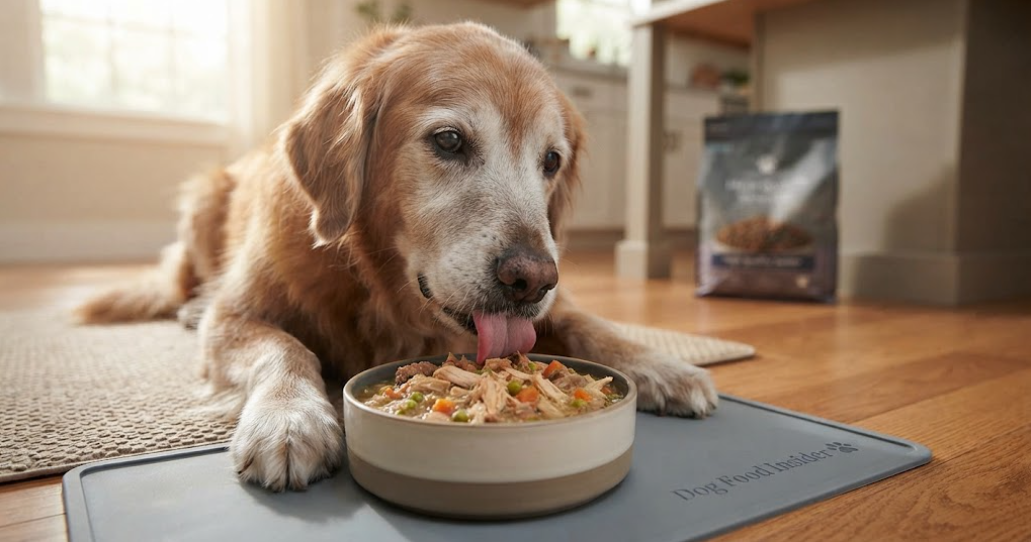
Yes, wet dog food can be significantly better for senior dogs, particularly those managing age-related health changes. While high-quality dry kibble remains a staple for many pets, senior dogs often face physiological shifts such as declining dental health, chronic dehydration, and reduced appetite—that make moisture-rich, highly palatable wet formulations a superior choice for daily nutrition.
However, wet food isn’t a one-size-fits-all solution. At Dog Food Insider, our editorial team evaluates pet nutrition based on veterinary science, ingredient quality, and life-stage appropriateness to ensure older dogs receive balanced, biologically appropriate care.
Common Health Challenges in Senior Dogs Addressed by Wet Food
Veterinarians frequently recommend transitioning aging pets to canned or pouches of wet food for older dogs to help manage specific age-related conditions:
-
Dental Pain and Tooth Loss: Periodontal disease, worn teeth, and missing molars make chewing hard kibble painful. Soft textures require minimal effort to consume.
-
Chronic Dehydration: Older dogs often have lower thirst drives or suffer from early-stage kidney disease. High moisture content (typically 75% to 80%) helps maintain optimal hydration and urinary tract health.
-
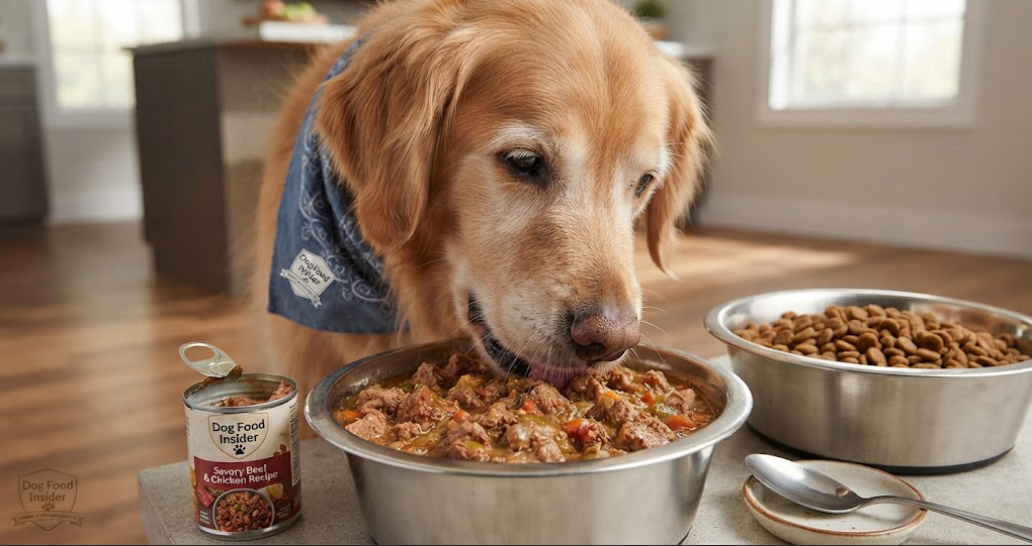
Declining Appetite and Olfactory Loss: As canine senses of smell and taste fade with age, highly aromatic canned dog food formulas stimulate interest and encourage eating in picky or frail seniors.
-
Weight Management and Lean Muscle Maintenance: Many senior canine nutrition diets feature higher protein-to-calorie ratios in wet formats, helping maintain muscle mass without excess carbohydrates.
The Evaluation Process: Why an Ingredient and Life-Stage Review is Required
You cannot select a senior diet based solely on marketing claims. To prevent nutritional deficiencies or exacerbate conditions like pancreatitis or kidney disease, pet parents must evaluate:
-
Nutritional Adequacy Statements: Look for AAFCO (Association of American Feed Control Officials) compliance statements verifying the food is formulated for maintenance or senior life stages.
-
Protein and Phosphorus Levels: While high-quality protein is vital for older dogs to prevent muscle wasting, dogs with compromised renal function may require controlled phosphorus levels prescribed by a veterinarian.
-
Ingredient Transparency: Reviewing detailed pet food reviews helps identify named meat sources, low sodium content, and the absence of artificial preservatives or excessive fillers.
Why Choose Dog Food Insider for Your Canine Nutrition Guidance?
While many sites provide generalized pet advice, Dog Food Insider prioritizes objective, science-backed clarity. We offer in-depth kibble and wet dog food comparisons to ensure you choose the exact formulation that matches your dog’s specific health profile. If your senior dog’s condition is complex such as advanced organ disease or severe mobility issues—we empower you with the right questions to discuss with your veterinarian.
Looking for the best diet to support your aging companion? Explore our expert guides and product breakdowns at Dog Food Insider today to help your senior dog live a healthier, more comfortable life.












Leave a Reply