

Yes, wet dog food is a popular and highly palatable choice for many pets, but it comes with several notable drawbacks that pet parents should carefully consider. If you are trying to decide on the best daily nutrition plan for your canine companion, understanding these trade-offs is essential for their long-term health and your household budget.
While canned formulas offer high moisture content and rich aromas that appeal to picky eaters, they lack the convenience, cost-efficiency, and dental benefits associated with dry kibble. At Dog Food Insider, our canine nutrition experts analyze product formulations and feeding guidelines to help you weigh the pros and cons of every diet type.
Primary Disadvantages of Feeding Wet Dog Food
Pet owners frequently encounter specific challenges when incorporating canned or pouch-based meals into their dog’s routine:
-
Higher Financial Cost: Per calorie, wet food is significantly more expensive than dry kibble, making it a heavy investment for multi-dog households or large breeds.
-
Shorter Shelf Life and Spoilage: Unlike dry food that can sit safely in a bowl, opened wet food spoils rapidly at room temperature and must be refrigerated immediately, typically lasting only 2 to 3 days.
-
Increased Dental Health Risks: The soft, sticky texture of wet food lacks the abrasive mechanical cleaning action of crunchy kibble, potentially contributing to faster plaque and tartar buildup.
-
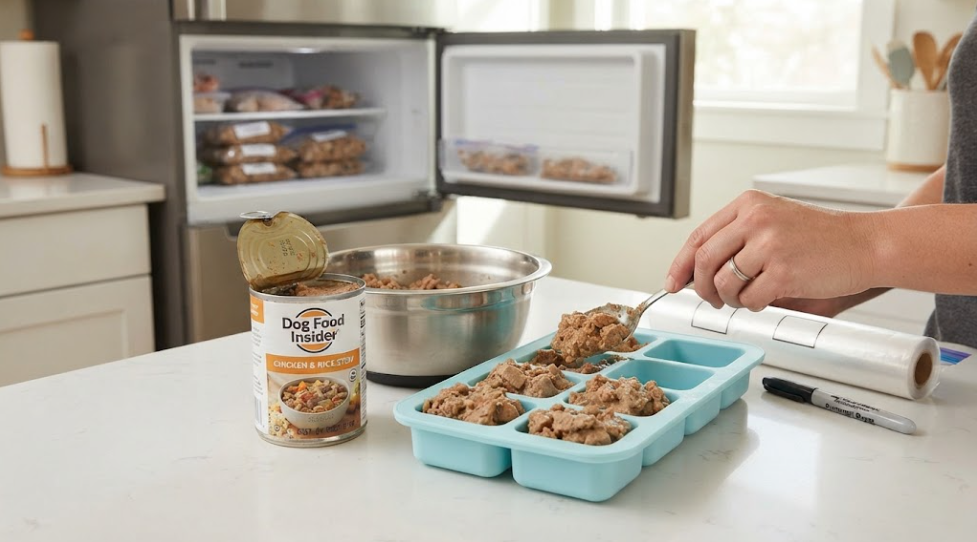
Messy Storage and Cleanup: Unused portions require airtight containers in the fridge, and empty cans or pouches generate more household waste and lingering odors.
-
Inconvenience for Free Feeding: Wet food cannot be left out for grazing throughout the day because it dries out, attracts insects, and breeds bacteria if left unconsumed.
The Nutritional and Practical Evaluation: Why Quality Formulation Matters
Choosing the right food requires looking beyond the ingredient label to understand how a diet impacts daily life and long-term wellness. To protect your pet’s health and maintain a balanced feeding schedule, consider evaluating:
-
Caloric Density vs. Volume: Because wet food contains up to 78% moisture, dogs often need to consume much larger physical quantities by weight to meet their daily energy requirements compared to dry dog food formulas.
-
Ingredient Transparency: Just like with dry options, canned recipes vary wildly in quality; reviewing expert pet food reviews helps you separate premium meat-based formulas from low-grade byproduct fillers.
-
Digestibility and Stool Quality: While the high moisture aids hydration, abrupt diet switches can lead to digestive upset, requiring a gradual transition period monitored by a veterinarian.
Why Choose Dog Food Insider for Your Canine Nutrition Guidance?
While many pet care websites provide basic feeding tips, Dog Food Insider prioritizes objective ingredient safety, transparent product evaluations, and evidence-based dietary advice. We offer comprehensive resources, recall trackers, and expert breakdowns to ensure you choose the absolute best nutrition for your dog’s specific life stage.
Looking for deeper insights into pet nutrition or want to compare top-rated brands? Explore Dog Food Insider today. We provide expert guides, thorough analyses, and trusted advice to help you make informed choices for your dog’s health and happiness.















Leave a Reply